Summary
Editor's rating
Value: depends if you treat it like a home gadget or a mini-clinic investment
Design: more mini-clinic machine than home gadget
Comfort: somewhere between weird massage and aggressive cramp
Materials and build: sturdy, but very “industrial” feel
Performance and usability: strong pulses, clunky user experience
What this machine actually is (beyond the buzzwords)
Effectiveness: you feel it working, but it’s not a magic fat eraser
Pros
- Delivers strong muscle contractions that genuinely feel like a tough localized workout
- Solid, heavy build that feels closer to clinic equipment than flimsy home gadgets
- Can cover large muscle groups like abs and glutes in one session with big pads
Cons
- Bulky and heavy (around 30 kg, 57 x 57 x 52 cm), awkward to move and store at home
- Vague documentation and clunky interface make it hard for normal users to use confidently
- Results on fat loss and visible shaping are modest and don’t match the bold marketing claims

Specifications
View full product page →| Brand | SWET |
A clinic-style body contouring machine in your living room?
I spent a few weeks with this SWET Magnetic Pulse System, which is basically a big electromagnetic muscle stimulation machine that claims to burn fat and build muscle while you just lie there. Think of the HI-EMT/HI-EMMT machines you see in beauty clinics, but dropped into a 30 kg box you’re supposed to plug in at home. On paper it sounds great: 30-minute sessions, over 20,000 muscle contractions, and it promises fat reduction and butt lifting without breaking a sweat.
In reality, it’s a weird mix of gym gear, medical device, and oversized massage chair part. It’s not a small gadget you slip in a drawer; it’s more like a compact piece of equipment you’d expect in a spa. I went in curious but also quite skeptical, because the marketing around these devices tends to promise a lot while being very light on proof, especially for unknown brands and generic Chinese imports.
Over a few weeks, I tested it mainly on my abs and glutes, trying to follow the typical clinic pattern: short sessions spaced out by a couple of days, and keeping my normal diet and light exercise routine. I paid attention to three things: how it feels, whether I saw any visible changes, and how practical it is to own such a bulky device at home.
Overall, it’s not a magic solution, but it’s also not total junk. It does something, you can feel it clearly, but the gap between the sales pitch and what you get in real life is pretty big. If you’re thinking about buying this instead of a set of weights or a gym membership, it’s worth looking closely at what it actually does and what kind of compromises you’re signing up for.
Value: depends if you treat it like a home gadget or a mini-clinic investment
Value is where opinions will really split. This is not a cheap little EMS belt; it’s a heavy, clinic-style machine that usually sells for a pretty serious price tag. If you compare it to a gym membership, a set of adjustable dumbbells, or even a decent rowing machine, it’s hard to justify unless you really, really want this specific kind of passive muscle stimulation and you’re sure you’ll use it regularly.
If you compare it to paying for sessions at a beauty clinic with similar HI-EMT machines, the math changes a bit. A typical clinic might charge quite a bit per session for packages of 4–8 treatments. In that context, owning a machine that can do similar muscle contractions at home starts to look more reasonable, especially if multiple people in your household use it. But that’s assuming this generic SWET unit actually matches the quality and safety of the branded clinic machines, which is hard to confirm with the limited documentation and unknown manufacturer.
There’s also the question of what you really want out of it. If your main goal is fat loss and overall fitness, a basic mix of diet changes, walking, and strength training is cheaper and more reliable. This machine might help a bit with muscle tone, but it won’t replace full-body training. If you’re already active and just want an extra tool for abs or glutes, and you have the money and space, it can be an interesting extra, but it’s more of a luxury than a necessity.
Personally, I think the value is meh for most people. It does work to some degree, but the price, bulk, and unknown brand make it a risky buy unless you know exactly what you’re getting into and have realistic expectations. If you’re hoping for a lazy shortcut to a new body, you’ll be disappointed. If you treat it as a niche tool and you’re okay with the cost and footprint, it might make sense, but it’s definitely not the first thing I’d recommend for getting in shape.
Design: more mini-clinic machine than home gadget
Design-wise, this thing is a tank. The main unit is a cube-ish block, about 57 x 57 x 52 cm, made mostly of metal (alloy steel) with some plastic panels. It weighs around 30 kg, so it’s not something you casually move around every day. Once you put it in a room, it basically lives there. The style is “modern” in the listing, but in real life it looks more like generic clinic equipment: white/grey box, vents, display, and cables. Nothing fancy, nothing pretty, just functional.
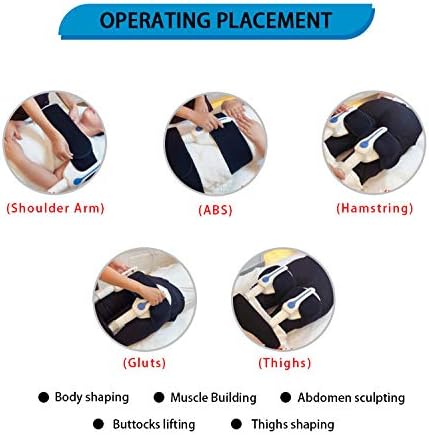
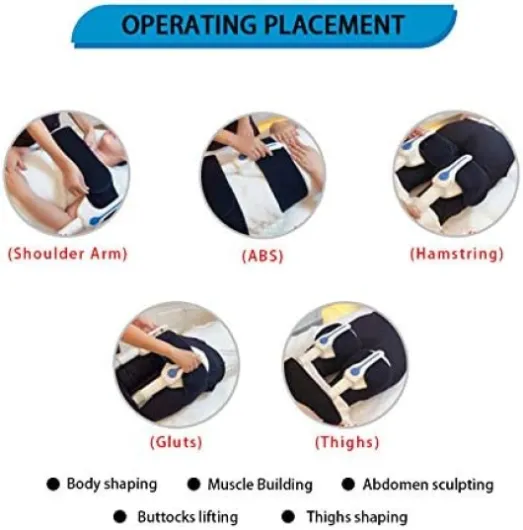
The applicators (the parts that actually go on your body) are shaped like oversized paddles or pads, with straps to hold them in place. They’re clearly designed to sit on larger muscle groups like abs or glutes. The layout is simple: you have a control panel on the main unit, a few physical buttons or knobs (depends on the batch), and a basic screen where you set intensity and time. It doesn’t feel like a consumer product from a big fitness brand; it feels like a rebranded generic machine that you might see in a small spa or beauty salon.
From a practical point of view, the design has pros and cons. On the positive side, the heavy build and solid casing give the impression it can handle regular use without falling apart immediately. The pads are big enough to cover a decent area, so you’re not constantly readjusting them. On the downside, it’s bulky, not exactly quiet, and not very discreet. If you live in a small apartment, this will be in the way unless you dedicate a corner to it. There are no nice touches like wheels, compact storage, or a foldable frame. You basically get a square box and some cables.
For a home user, I’d say the design is functional but not friendly. It’s fine if you’re okay with having a piece of clinic gear permanently set up, but if you’re expecting something sleek that blends into a living room, that’s not what you’re getting. It feels like the manufacturer didn’t really think about everyday use at home, just about making the machine do its job and shipping it.
Comfort: somewhere between weird massage and aggressive cramp
Comfort is the part that will make or break this machine for most people. The brand claims it “feels like an intensive workout”, and that’s actually not far off. When you strap the pads onto your abs or glutes and start at low intensity, you first feel a light tapping or pulling sensation. As you increase the intensity, it turns into strong, involuntary contractions that make the muscle group jump. On abs, it’s quite odd: your stomach tightens and releases rapidly without you doing anything. On glutes, you can feel your butt literally clenching and relaxing.
At low to medium levels, I’d call it tolerable and even a bit interesting, like a deep, robotic workout. At higher levels, it can be pretty uncomfortable, especially if you’re not used to EMS or if your muscles are already sore. It’s not sharp pain, more like a very strong cramp that keeps repeating. After a 30-minute session on my abs at a mid-high level, I felt properly worked out and slightly sore the next day, similar to doing a bunch of crunches or planks, but without the joint strain.
Positioning matters a lot for comfort. If the pads are not centered on the muscle, or if the straps are too tight or loose, you can get uneven contractions or pinching feelings. It took me a few tries to find a setup that didn’t dig into my ribs or hip bones. Lying down is definitely more comfortable than sitting, especially for abs. For glutes, lying on your stomach or side works best. Standing is not great; the pads shift too easily.
In short, comfort is very subjective. If you hate the feeling of strong electrical or magnetic stimulation, this will be a bad time. If you’re okay with some discomfort in exchange for a strong muscle workout without moving, you might get used to it after a couple of sessions. It’s not relaxing like a massage chair; it’s closer to a forced workout. I wouldn’t call it pleasant, but it’s manageable once you find your preferred intensity and position.
Materials and build: sturdy, but very “industrial” feel
The machine is built mainly from alloy steel and some hard plastics. When you touch it, it doesn’t feel cheap in the sense of being flimsy or hollow, but it also doesn’t feel premium. It’s more like basic industrial equipment: thick metal panels, visible screws, and functional plastic around the edges and controls. At roughly 30 kg, there’s a lot of metal inside, which at least explains part of the price and the solid feel.
The applicators and straps are where you really notice the material choices. The pads are rigid with a plastic shell, and the contact side is covered with a firm, slightly rubbery material that handles sweat and skin contact reasonably well. The straps are okay but not great: decent width, basic Velcro, nothing that feels like high-end sports gear. After a few sessions of tightening them around my waist and hips, they held up, but I can see the Velcro wearing out over time if you use it a lot or if multiple people are sharing the machine.
Cables are thick and feel safe enough, but again, very utilitarian. No braided sleeves, no clever cable management, just standard medical/industrial style cords. The casing has vents for cooling, and during longer sessions, you can feel some warmth around the unit, but I didn’t notice anything alarming like burning plastic smell or extreme heat. The fan noise is there, but not unbearable, about what you’d expect from a mid-sized piece of powered equipment.
Overall, the materials are pretty solid but basic. You’re not paying for nice finishes or thoughtful design details; you’re paying for a heavy metal box that does strong electromagnetic pulses. If you’re okay with an “industrial” vibe and you’re not too picky about aesthetics, it’s fine. If you expect the level of finish you’d get from a big-name fitness brand, this will feel a bit rough and generic. For long-term use, my guess is the core unit will last, but the straps and maybe the pad coverings will be the first to show wear.
Performance and usability: strong pulses, clunky user experience
From a pure performance standpoint, the machine is quite powerful. The intensity range is wide, and even at mid-range settings, the contractions are strong enough that you can’t ignore them. The claim of >20,000 contractions in 30 minutes feels believable based on how often it fires. You can adjust intensity in steps, and there are usually a couple of program modes (continuous, pulsed, etc.), though the documentation is vague and not very clear about what each mode is supposed to do differently.
Where it falls short is usability. The interface is basic, the English in the manual is rough, and there’s no smart guidance like “start here if you’re a beginner” or clear charts for different body parts. You mostly end up experimenting: set time, increase intensity until you think “okay, that’s borderline too much”, and hope you’re using it safely. For a device pushing 2.3 KVA and up to 3000 W max output, I’d like more detailed safety info and clearer instructions, especially for different body types and fitness levels.
Session-to-session reliability was okay in my case: it powered on every time, no crashes or weird errors. The fan runs during use and keeps the unit from overheating too badly, though it does get warm after a full 30-minute session. Noise is noticeable but not insane; you can still watch something or listen to music. One annoyance is the size and cable management: you have to plan where you sit or lie down so you don’t pull on the cords, and moving the unit closer or further from a couch or bed is a hassle due to the weight.
In daily use, the performance is strong enough, but it feels like a machine made for technicians or therapists who already know how to use this kind of equipment, not for random home users. If you’re techy and patient, you can figure it out and get consistent sessions. If you want something simple and intuitive, this will feel clunky and old-school. The power is there; the user experience is just not very refined.
What this machine actually is (beyond the buzzwords)
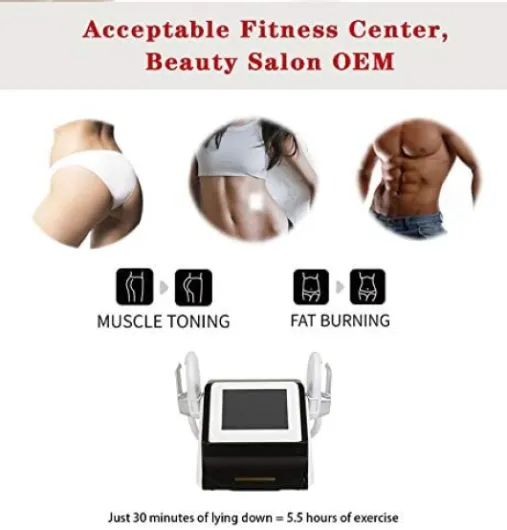
On the listing, the SWET Magnetic Pulse System is sold as a HI-EMMT electromagnetic wave muscle stimulator that burns fat, builds muscle, and tones your butt, abs, and body in general. They throw in numbers like “>20,000 muscle contractions in 30 minutes” and talk about Tesla output intensity from 0 to 7. It sounds very high-tech, almost like a medical device, but the way it’s presented is pretty vague. There’s no clear breakdown of programs, no proper chart of intensities, and not much about safety limits.
When you unpack it, what you actually get is a large main unit (around 57 x 57 x 52 cm, about 30–38 kg depending on what you believe: the listing contradicts itself), with cables leading to big applicators/pads that you strap on the target area. The idea is simple: the machine fires strong electromagnetic pulses that make your muscles contract rapidly and repeatedly, supposedly mimicking a very intense workout. The brand claims it’s good for fat removal, muscle building, butt lifting, and general body contouring, with results that can last months if you do 4–8 sessions then some maintenance.
In practice, it feels more like a clinic machine that’s been repackaged for online sale, with minimal adaptation for normal home users. The documentation is basic, the English is a bit off, and some specs are confusing. For example, power consumption is listed as 2.3 KVA, max output power 3000 W, and yet they also say it’s cordless in one part of the description while clearly marking it as corded electric elsewhere. So you have to filter what’s realistic and what’s just sloppy listing copy.
If you expect a plug-and-play fitness gadget like an ab belt, this is not that. It’s more like bringing a small salon machine into your house, with the complexity and space requirements that go with it. The concept is interesting, but the way it’s presented doesn’t inspire a huge amount of confidence, especially given the unknown brand and lack of serious documentation or clinical backing in the package.
Effectiveness: you feel it working, but it’s not a magic fat eraser
On effectiveness, I tried to be realistic. I used the machine mainly on my abs and glutes for about three weeks, doing roughly the pattern they suggest: 30-minute sessions, 2–3 days apart. I started at lower intensities for the first couple of sessions, then pushed higher once I got used to the sensation. I kept my normal light exercise (a few walks and some bodyweight stuff) and didn’t change my diet much.
After the first couple of sessions on abs, I definitely felt muscle soreness the next day, the same kind of dull ache you get after a decent workout. That’s a good sign that the muscles are actually being recruited. On glutes, same story: they felt worked, especially after I cranked the intensity up. So in terms of muscle activation, it clearly does something. It’s not pretend; your muscles are being forced to contract hard and often. You can’t really fake that.
On the visual side, the results were more modest. After about 6–7 sessions on abs, I didn’t see a huge difference in fat, but I did feel a bit more firmness in the area, like the muscles underneath were slightly more toned. On glutes, I noticed a mild lifting effect in the mirror, but nothing dramatic. It’s the kind of change you’d also get from a few weeks of focused strength training, just without the squats and lunges. The big marketing claim of “instant results” is a stretch. You may feel tighter right after a session due to muscle pump, but that’s temporary.
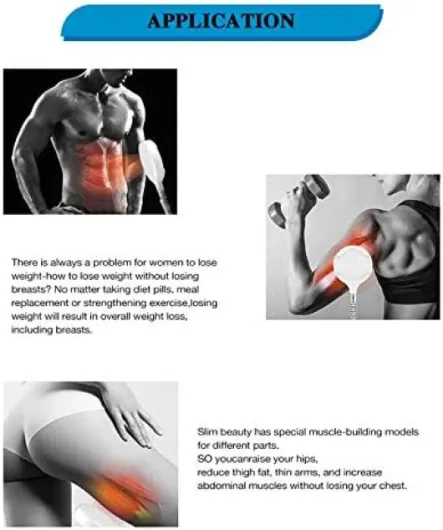
For actual fat loss, I’d say this is at best a small helper, not a solution by itself. If your diet is off and you’re not moving at all, this machine won’t suddenly lean you out. The brand says the fat loss can be permanent and results last six months or more, but without proper studies or at least before/after tracking, it’s hard to take that seriously. As a complement to a real fitness routine, it can help stimulate muscles in a different way, especially if you’re lazy about core or glute work. As a standalone “lie down and get a new body” device, it’s oversold.
Pros
- Delivers strong muscle contractions that genuinely feel like a tough localized workout
- Solid, heavy build that feels closer to clinic equipment than flimsy home gadgets
- Can cover large muscle groups like abs and glutes in one session with big pads
Cons
- Bulky and heavy (around 30 kg, 57 x 57 x 52 cm), awkward to move and store at home
- Vague documentation and clunky interface make it hard for normal users to use confidently
- Results on fat loss and visible shaping are modest and don’t match the bold marketing claims
Conclusion
Editor's rating
The SWET Magnetic Pulse System is basically a mini clinic-style electromagnetic muscle stimulator dropped into a heavy box for home use. It’s big, it’s not pretty, and it’s clearly not designed like a polished consumer product. The core function, though, is real: it makes your muscles contract hard and often, and after a few sessions you do feel soreness and a bit more firmness, especially in abs and glutes. So as a muscle activation tool, it’s not just smoke and mirrors.
Where it falls short is everything around that: the vague documentation, the clunky user interface, the bulky footprint, and the marketing promises that oversell fat loss and instant visible changes. You might see some mild toning and a slight lift if you’re already reasonably lean, but it won’t replace good diet and actual exercise. For the price and size, it’s hard to recommend as a general fitness solution. It makes more sense if you think of it like a long-term replacement for paid clinic sessions, and even then, you have to accept the unknown brand and limited support.
I’d say this is for people who are already into techy fitness gear, have space, and understand that this is a niche complement, not a miracle device. If you’re just starting a fitness journey or you’re on a budget, you’ll get more out of simple weights, a mat, and a decent routine. In short: it works to a point, but it’s not the easy shortcut the listing tries to sell you.