Summary
Editor's rating
Value: okay if you really want a gadget, but not clearly better than free exercises
Design: more clinic chair than discreet wellness gadget
Comfort: tolerable for 20 minutes, but not exactly relaxing
Materials and build: solid enough, but very "generic device" vibes
Performance: stable operation but very basic controls
What you actually get out of the box
Effectiveness: some signs of work, but no miracle in two weeks
Pros
- Non-invasive and easy to use: just sit on it and run a 20-minute session
- Stable heating and pulse performance with 3 modes and 5 intensity levels
- Helps create a simple routine for pelvic floor work if you otherwise forget Kegels
Cons
- Very basic instructions and no clear medical guidance or programs
- Hard seating surface and slightly awkward positioning reduce comfort
- Results are modest and may not be better than consistent manual exercises

Specifications
View full product page →| Brand | PLOTSAGE |
An odd-looking gadget for a very real problem
I picked up this Pelvic Floor Muscle Orthotics device because, bluntly, I’ve had some light leakage when coughing and sneezing, plus way too many bathroom trips, especially at night. Classic pelvic floor laziness from too much sitting and not enough exercise. I already knew about Kegel exercises, but I’m not good at doing them regularly, so a gadget that “does it for you” sounded tempting, even if the brand is not exactly famous.
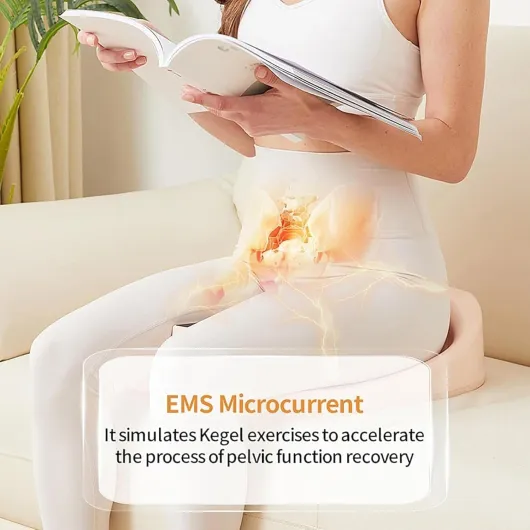
The product page promises help with urinary incontinence, pelvic floor relaxation, even male prostate issues. It runs on low-frequency pulses, has 3 modes, 5 intensity levels, and a small LCD screen. On paper, it sounds like a kind of electrical Kegel trainer crossed with a warm seat. I used it for about two weeks, roughly one 20‑minute session a day, sometimes skipping a day when I was busy or a bit sore.
My expectations were pretty realistic. I wasn’t expecting miracles in a few days, but I wanted something that at least feels consistent to use and doesn’t feel like a cheap electric toy. I also wanted something non-invasive, so the fact that you just sit on it and let it do its thing was a big plus. No probes, no gels, no awkward cleaning routines.
After these two weeks, my opinion is mixed. The device works in the sense that it powers on, heats up, and you can feel pulses and contractions in the pelvic area. But between the generic instructions, the slightly crude design, and the lack of clear medical backing, it feels more like a budget experiment than a polished health tool. It’s not useless, but it’s definitely not a magic fix either.
Value: okay if you really want a gadget, but not clearly better than free exercises
In terms of value, this one sits in a grey area. It’s clearly cheaper than some high-end branded pelvic floor trainers or clinic treatments, but it’s still a chunk of money for what is basically a heated, pulsing seat with minimal instructions. Since the brand is not well known and there’s no strong medical backing shown, a good part of what you’re paying for is just the hardware and the hope that it will help.
If you’re the kind of person who never sticks to Kegel exercises on your own, this could be a way to at least do something regularly. The auto shut-off at 20 minutes makes it easy to build a routine: sit down, start it, wait until it stops, done. In that sense, you might see value in having a physical reminder and a structured session. I did find it easier to commit to using this device than to remember to do Kegels three times a day with no prompt.
On the flip side, the results after two weeks were modest, and I can’t say they were clearly better than what you’d get from disciplined manual exercises. There’s also the question of durability over the long term; the build feels okay but not premium, and if it fails after a year, that definitely changes the value calculation. Plus, you have zero extra features like progress tracking, app guidance, or user programs that some more expensive devices offer.
So for value, I’d call it decent but nothing more. If you find it at a discount and you’re curious and comfortable experimenting, it might be worth it as an extra tool. If the price is high where you live, I’d honestly start with free Kegels, some physio advice if you can get it, and maybe look at more established pelvic trainers before dropping money on this one. It’s not a rip-off, but it’s also not clearly a great bargain.
Design: more clinic chair than discreet wellness gadget
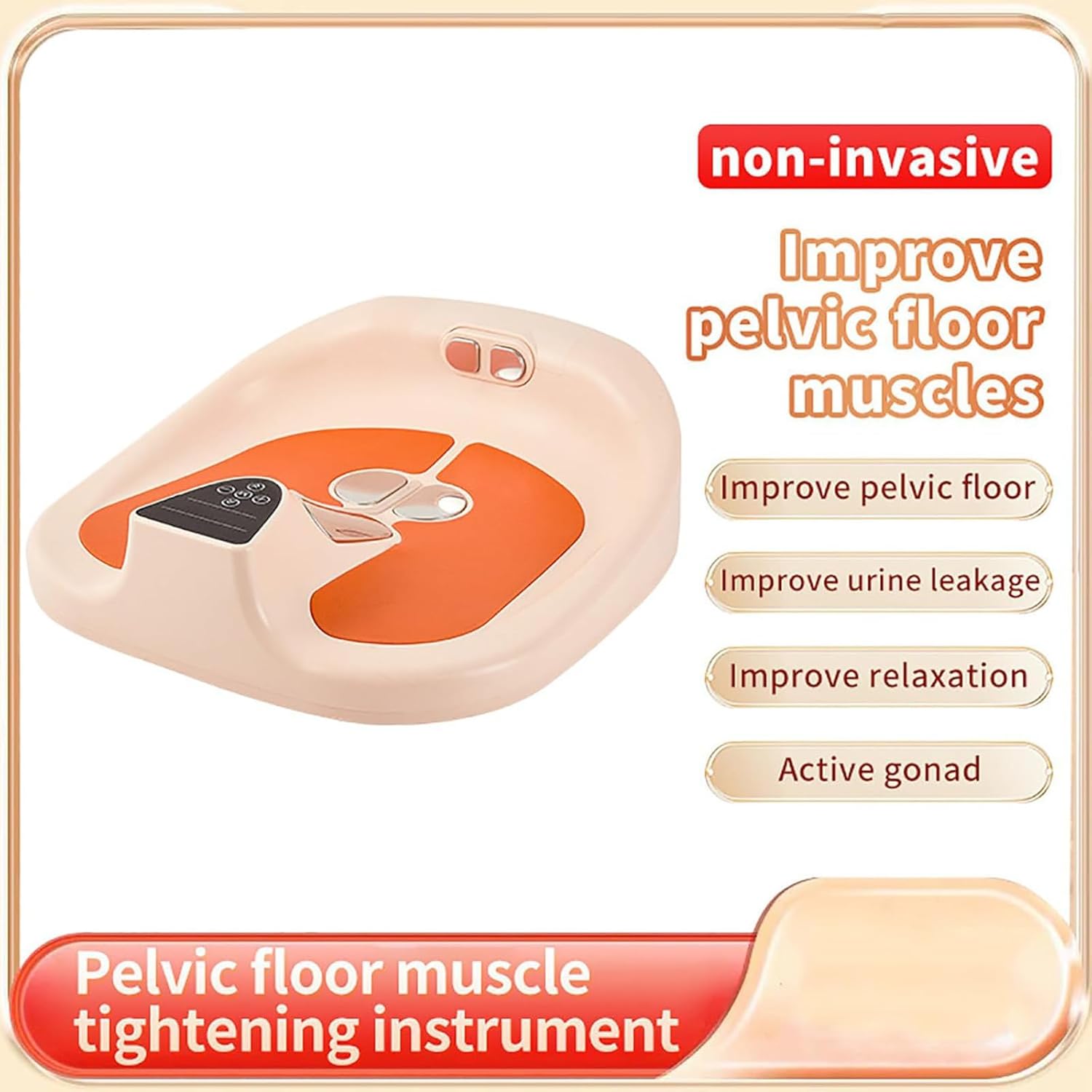
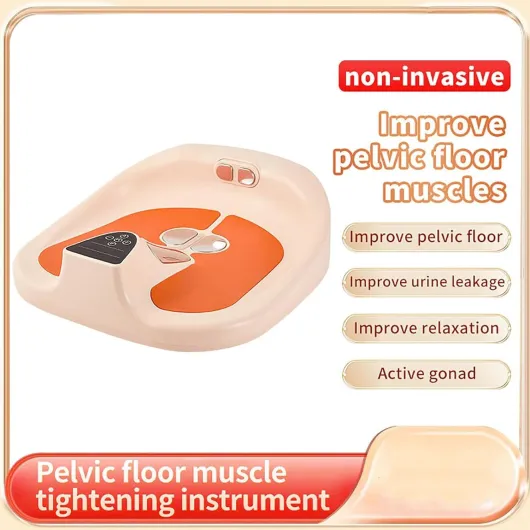
The design is… let’s say practical rather than pretty. It’s a square-shaped device in orange, with a flat top where you sit and some defined "detection" zones where your thighs are supposed to rest. It looks more like a piece of physio equipment than something you’d happily leave on display. The orange color is a bit loud; I would have preferred something more neutral if it’s going to live on a chair in the bedroom or office.
The LCD display and buttons are on one side, easy enough to reach when you’re seated. You get a power connection port, a simple screen that shows mode and level, and a couple of buttons: one for mode (M) and probably plus/minus or similar to adjust intensity. The layout is straightforward, but the icons and text are not super clear. You can figure it out after a few uses, yet the first time feels a bit trial-and-error because the manual doesn’t really explain what each mode is actually doing beyond “heating mode, telescopic adjustment”.
One thing to note: the device is not exactly subtle in size. You need a stable chair or flat surface to put it on, and then you sit on top of it. It’s not something you’d easily travel with or hide in a drawer if you have roommates. The power cable also limits where you can use it; you basically need to be near a wall outlet. No internal battery means no freedom of movement while it’s running. That’s fine for a 20-minute session, but it does box you in.
From a usability point of view, the design could use more ergonomic shaping. The seating area is quite flat and firm, so after 15–20 minutes it can feel a bit hard, especially if you’re light or bony. The concept of having two detection zones for the thighs is good, but alignment isn’t super intuitive. You kind of shuffle around until you feel the pulses where they’re supposed to be. Overall, the design is functional but a bit crude. It works, but it doesn’t feel very thought-through from a user comfort and discretion angle.
Comfort: tolerable for 20 minutes, but not exactly relaxing
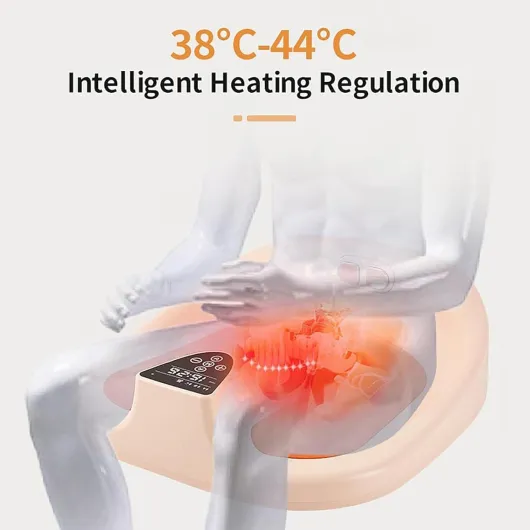
Comfort is where this thing is very average. When you first sit on it, the hard surface is noticeable. It’s not painful, but it feels like sitting on a firm plastic board with a bit of warmth. The constant temperature feature (38–44°C) does kick in after a couple of minutes, and that part is actually quite pleasant. It’s like a mild heated seat, not too hot. I never felt burned or overly sweaty, just comfortably warm in the pelvic and lower butt area.
The pulses are another story. At low levels (gear 1–2), it’s a mild tingling and gentle contraction feeling, not too intrusive. Once you push it to level 3 or above, depending on your sensitivity, it can feel quite strong and a bit weird, especially the first time. It’s not painful, but it’s a deep buzz and squeeze in a very private area. I had to build up slowly. First few sessions I stayed on mode 1, level 2, just to get used to it. Jumping straight to higher levels is not a good idea; you’ll probably tense up and hate it.
Positioning is also part of comfort. The instructions say to keep your thigh in one of the two detection areas. In practice, that means you kind of shuffle and adjust until you feel the pulses where they should be. If you’re not lined up right, you may feel more stimulation on one side or too far back. I had one session where it was clearly off and it just felt like random buzzing under one cheek, which was more annoying than helpful. Once you find the sweet spot, it’s okay, but it’s not self-explanatory.
Overall, I’d say comfort is acceptable for a 20-minute session, but it’s not something you’d forget you’re sitting on. I never got to the point of using it while reading or working without noticing it; it always demanded a bit of attention because of the sensations. If you’re expecting a spa-like, relaxing experience, this isn’t that. It’s more like a short, slightly awkward physiotherapy session at home. You can live with it, but it’s not particularly pleasant.
Materials and build: solid enough, but very "generic device" vibes
The product page just says “metal” for material type, but in reality it’s a mix of hard plastic casing with some internal metal structure and components. The outer shell feels reasonably sturdy. It doesn’t creak or flex when you sit on it, even if you shift your weight. I’m around average weight and it handled me fine. I’d still be careful if you’re on the heavier side, because there’s no official max weight mentioned anywhere in the documentation I saw.
The top seating surface is smooth and a bit glossy, not cushioned. That makes it easy to wipe down, which is important for hygiene, but it also means there’s zero padding. If you’re sensitive or you plan to use it daily, you might find the hardness a bit annoying over time. I ended up putting a very thin cloth on top once or twice, but that also slightly dulls the sensation of the pulses, so it’s a trade-off. Ideally, they would have used a more grippy and slightly softer material on the seating area.
The buttons and LCD screen feel basic. The buttons click fine, but they’re not exactly high-end. The screen is legible, though not super bright. It’s okay indoors; I didn’t try it in strong sunlight because honestly this is not a device I’d use anywhere except inside my home. The cable and power brick look like standard generic adapters; nothing fancy, but they didn’t heat up too much or feel dangerous.
In terms of overall build quality, I’d say it’s decent for the price range it seems to be targeting. It doesn’t feel like it’s going to fall apart in a month, but it also doesn’t give that “medical-grade” confidence. For a device that sends pulses into a sensitive area, I would have liked a clearer sense of safety certifications or better labeling. As it is, the materials and build feel okay, but pretty clearly budget-level. If you’re expecting hospital-equipment quality, this isn’t it.
Performance: stable operation but very basic controls
From a pure performance angle, the device is pretty stable. It powers on quickly when plugged in, the 2-second press on the M button works every time, and the auto shut-off after about 20 minutes is reliable. I never had random shutdowns or overheating issues. The heating stays within the advertised 38–44°C range, at least by feel. It gets warm but never uncomfortably hot. After about 5 minutes, you clearly feel the warmth spreading in the pelvic area, and it stays consistent until the session ends.
The 3 modes and 5 intensity levels give some flexibility, but they’re not well described. You can feel that the modes change the pattern of pulses (more continuous, more intermittent, etc.), but you’re basically guessing what each one is “for”. It’s not like one mode is clearly labeled for postpartum recovery and another for general toning. So you end up picking the one that feels the least annoying and sticking with it. The 5 gear speeds are enough; I never felt like I needed more levels. In fact, level 5 was too strong for me for anything more than a short test.
Noise-wise, it’s fairly quiet. There’s a very soft internal hum when the pulses are going, but nothing that would be heard through a closed door. No loud fans or mechanical clunks. The heating is silent. From the outside, it just looks like you’re sitting on a weird orange pad, so in that sense it’s discreet enough if you live with other people. As long as they don’t ask what the orange thing is.
One downside is the total lack of feedback or tracking. There’s no way to see how many sessions you’ve done or how long you’ve been using it over time, so staying consistent is up to your own discipline. Also, there’s no quick “pause” button; if you need to get up, you basically stop the session and start again later, which is a bit annoying. Overall, performance is pretty solid but basic: it does what it says, but there’s zero smart feature or guidance around it.
What you actually get out of the box
Out of the box, the presentation is pretty barebones. You basically get the main pelvic floor training tool, a power adapter, and that’s about it. No fancy storage bag, no extra pads or accessories. The packaging itself is functional cardboard with basic printing. It feels closer to a generic medical gadget from an online marketplace than something from a well-known health brand. Nothing wrong with that in itself, but it sets your expectations: this is a budget device, not a premium clinic-grade machine.
The manual is short and a bit clumsy in terms of language. The steps are there: plug it in, hold the M button for 2 seconds, choose your mode, and make sure your thigh is in one of the two detection areas. But there’s almost no real guidance on which mode to use for which problem, how often to train per week, or what kind of progress to expect. For something targeting incontinence and pelvic health, I would have liked more precise instructions or at least a basic program suggestion like “start with mode 1, level 2 for a week, then increase”. Instead, you’re left to guess.
On the technical side, the label says 110–220V input, 12V/2A output, and a working temperature of 38–44°C. So it’s basically a low-voltage powered device with a heating element and a pulse system. There’s an LCD screen that shows mode and intensity, but it’s small and quite basic. No app, no Bluetooth, no tracking. If you like connected gadgets, you’ll find this very old-school. If you hate apps, you might see that as a plus.
Overall, the presentation is simple, maybe too simple for something meant to work on such a sensitive area. It gives the impression of a generic OEM product with the PLOTSAGE name slapped on it. It gets the job done in terms of basic info and setup, but it doesn’t inspire a lot of confidence. If you need hand-holding or clear medical framing, this presentation won’t reassure you much.
Effectiveness: some signs of work, but no miracle in two weeks
On the effectiveness side, I tried to be realistic. Pelvic floor muscles don’t get strong overnight, and two weeks is short. I used the device roughly once a day for around 20 minutes, letting the auto shut-off do its thing. I alternated mainly between the first two modes and played with the intensity from level 2 to 4 depending on how sensitive I felt that day. After the first few sessions, I did notice a slight feeling of “fatigue” in the pelvic area, similar to what you get after doing proper Kegel exercises. That was my first sign that it was actually doing something and not just buzzing for fun.
In terms of urinary issues, I can’t say it erased the problem, but I did feel a very small improvement in control. For example, sneezing or coughing felt a bit less risky after about 10 days. It’s subtle and hard to quantify, and it could also be partly because I became more aware of actively contracting the muscles thanks to the sessions. I didn’t see a dramatic reduction in night-time bathroom trips, but there were a couple of nights where I got up one time instead of two. That’s not exactly strong evidence, but it’s something.
For male prostate issues, I can’t really comment in detail personally, but the idea is that increased local blood circulation and pelvic floor strength can help. The device does create a strong local stimulation, so in theory it could support that. However, there’s no clinical data or serious documentation provided with the product, so you’re basically trusting a generic claim. If you have a real medical prostate problem, I’d definitely talk to a doctor before relying on this as a solution.
Overall, I’d say it helps a bit but it’s not a standalone fix. If you combine it with actual Kegel exercises, lifestyle changes (less sitting, better posture), and maybe professional advice, it could be a useful extra tool. On its own, in this short test window, it delivered mild improvement at best. It’s also hard to know if the same results could be achieved just by doing consistent Kegels without any device, which cost nothing. So yes, it “works” in the sense that you feel muscles working and there are small benefits, but don’t expect a huge turnaround from this alone.
Pros
- Non-invasive and easy to use: just sit on it and run a 20-minute session
- Stable heating and pulse performance with 3 modes and 5 intensity levels
- Helps create a simple routine for pelvic floor work if you otherwise forget Kegels
Cons
- Very basic instructions and no clear medical guidance or programs
- Hard seating surface and slightly awkward positioning reduce comfort
- Results are modest and may not be better than consistent manual exercises
Conclusion
Editor's rating
After using this Pelvic Floor Muscle Orthotics device for about two weeks, my take is that it’s a functional but very basic tool. It does heat up, it does send pulses, and you can feel your pelvic floor area working. I noticed a small improvement in control and awareness, but nothing dramatic. It feels more like a helper for people who struggle to stay consistent with pelvic exercises, rather than a serious medical solution on its own. The build is decent, the operation is stable, but the whole thing screams “generic budget gadget” rather than a carefully designed health product.
Who is it for? Probably for people who already understand pelvic floor issues a bit, want a non-invasive option, and are okay with a slightly awkward, clinical-feeling device. If you’re shy about internal probes or complicated setups, this is at least easy to use: sit, press a button, wait 20 minutes. Who should skip it? Anyone expecting fast, clear results, or who needs medically supervised treatment for serious incontinence or prostate problems. Also, if you’re disciplined enough to do regular Kegels, you might get similar benefits without spending the money.
In short, it’s a meh but workable gadget. It gets the job done at a basic level, but it’s not polished, not heavily documented, and not obviously better than free alternatives plus good habits. If you go for it, treat it as a small extra aid, not a magic fix.