Summary
Editor's rating
Value for money: decent if you accept the generic feel
Design: practical enough, but not subtle or pretty
Battery life and charging: fine, but not truly cordless freedom
Comfort: you get used to it, but it’s not exactly spa-level
Performance: stable sessions, simple controls, some quirks
What you actually get out of the box
Effectiveness: it actually works, but don’t expect miracles
Pros
- Delivers clear, strong pelvic floor muscle contractions during 28-minute sessions
- Can be used by both postpartum women and men for general pelvic and glute activation
- Lower cost than branded clinical-style pelvic floor chairs with similar basic function
Cons
- Hard plastic seat and generic build make it uncomfortable and cheap-feeling over longer sessions
- Minimal documentation, no clear medical backing, and unknown brand reduce trust
- Battery life and interface are basic, with vague indicators and no usage guidance or tailored programs

Specifications
View full product page →| Brand | Generic |
A weird-looking gadget that promises a lot
I’ve spent about three weeks with this generic electric pelvic floor muscle trainer, using it roughly once a day, five days a week. On paper, it sounds pretty serious: low-frequency electromagnetic pulses, 12,000 contractions in 28 minutes, helps postpartum recovery, helps men with prostate-related issues, tones thighs, butt and lower abs… basically a mini clinic machine for your living room. In reality, it’s a lot more basic and a bit clunky than the description suggests, but it does do something, which is already more than a lot of cheap gadgets.
I got it because my partner recently had a baby and was curious about pelvic floor recovery, and I also sit at a desk all day and wanted to see if it could help with weak glutes and the occasional urgency when I’ve held my bladder too long. So we both tried it: one postpartum woman and one desk-jockey guy. That gave us a pretty mixed but realistic view of what this thing can and can’t handle.
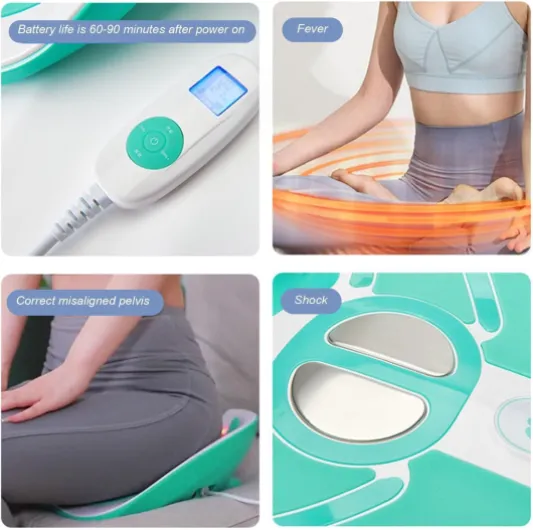
First impression: it’s heavy (a bit over 2 kg), bigger than expected, and feels more like a budget clinic device than a sleek home gadget. You plop it on a chair, sit on it in a pretty specific position, and let it run a 28‑minute program. The remote looks and feels cheap, but it works. There’s no app, no fancy tracking, just intensity levels and start/stop.
Overall, I’d say this: it’s not magic, but after a couple of weeks you can feel your pelvic muscles working without having to think about doing Kegels all the time. If you go in with realistic expectations and you’re okay with a no-name brand and pretty bare-bones design, it can be useful. If you expect medical-grade precision or super polished ergonomics, you’ll probably be annoyed pretty fast.
Value for money: decent if you accept the generic feel
Since this is a generic, unbranded device, the main argument in its favor is usually price. Similar pelvic floor EMS/EMF chairs from known brands or clinic-grade equipment can cost a lot. This one sits in a much lower price bracket, which is why I was willing to try it in the first place. You get a working pelvic floor trainer with a remote, internal battery, and a fairly strong contraction range, without paying the premium that big medical brands charge.
Where the value takes a hit is on the "trust and support" side. There’s no strong documentation, no clear medical backing, and customer service is basically a gamble depending on the seller. If something breaks after a few months or if you’re not sure about using it postpartum or after surgery, you’re basically on your own or relying on your doctor’s general opinion about these kinds of devices, not this specific one. That’s the trade-off with a generic product: lower price, but less reassurance.
In terms of what you actually get for your money, I’d say it’s pretty solid for someone who already knows they want a pelvic floor trainer and just needs a functional unit. Both of us felt real muscle activation and some modest benefits after a couple of weeks. It’s definitely more effective than just saying "I’ll do Kegels later" and then forgetting. If you compare it to doing nothing, it’s worth it. If you compare it to guided physio with a professional, obviously the physio wins, but also costs more.
So, value-wise, I’d put it in the "worth considering if you’re budget-conscious and realistic" category. If you’re the cautious type who wants strong medical proof, a known brand, and responsive support, you should probably spend more on a reputable pelvic floor system or go through a physiotherapist. If you’re okay with a no-frills tool that does what it says in a basic way, then the price-to-function ratio is actually not bad.

Design: practical enough, but not subtle or pretty
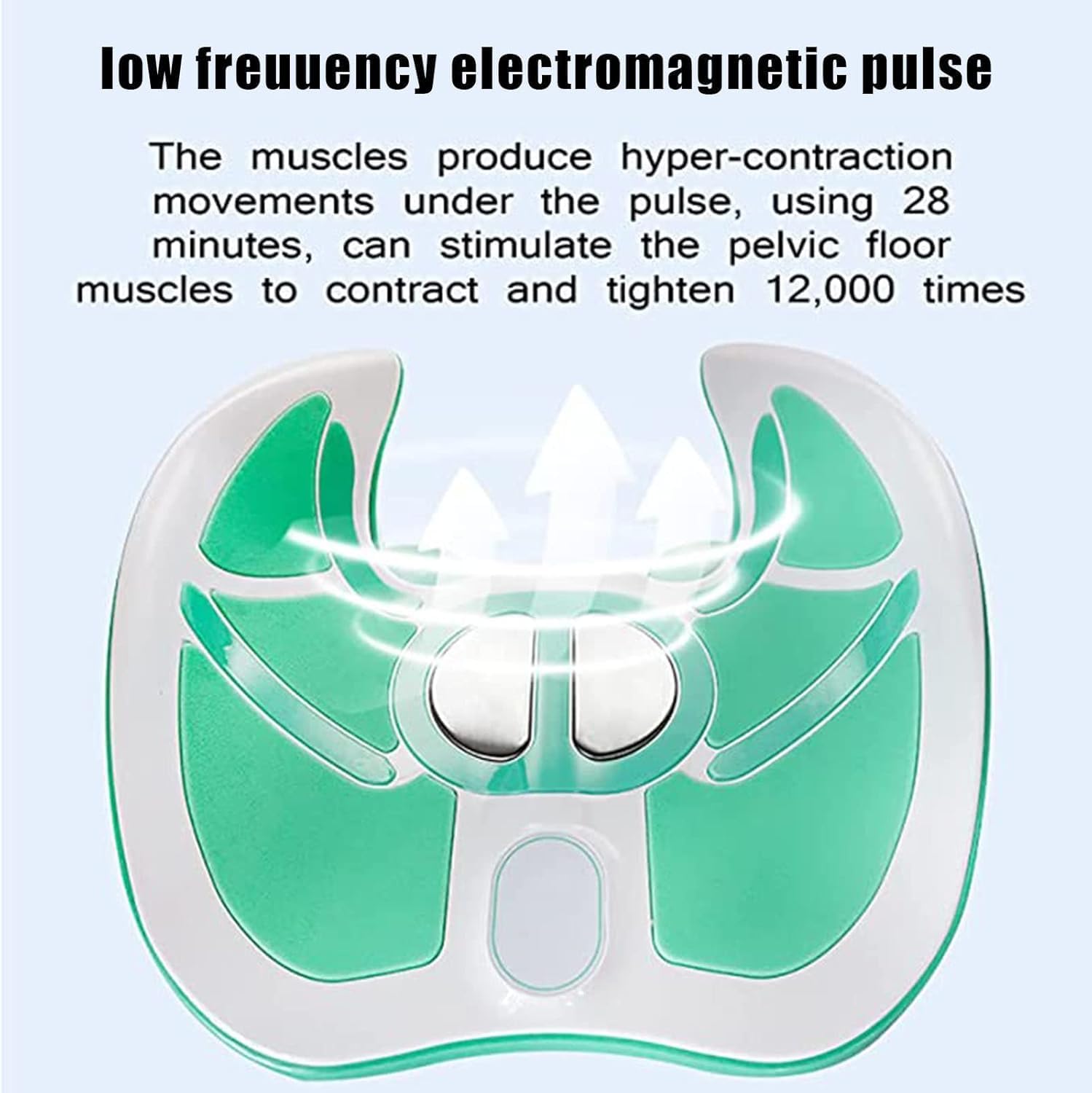
Design-wise, this thing is more "clinic waiting room" than stylish smart device. It’s a hard ABS plastic shell shaped like a wide saddle/seat. You put it on a firm chair, then sit with your thighs on the sides and your perineum roughly over the center where the electromagnetic pulses come from. There’s no cushioning built in, no fabric cover, and nothing that makes it blend into a living room. It’s clearly a tool, not decor. If you care about looks, you’ll probably end up hiding it in a closet between uses.
The controls are all on the remote, which is simple: a small screen, a few buttons for power, intensity, and mode. The main unit itself barely has visible controls, which is nice because you don’t have to bend down to fiddle with it while sitting. But the remote feels cheap – light plastic, clicky buttons, and the screen is tiny. It does the job, but you can tell this wasn’t built with premium design in mind. It’s the kind of remote you’re always slightly scared of dropping because it looks like it would crack easily.
On the plus side, the overall shape makes it fairly easy to position yourself. After a couple of uses, you intuitively know where to sit to feel the contractions in the right spot. There are no clear alignment marks or guides printed on the plastic, though, which would have helped. The first few sessions, both of us had to adjust our position a few times to avoid the feeling going too much into the butt or upper thighs instead of the pelvic floor area. A simple printed guide or little ridge would have improved that.
Discretion-wise, forget it. When it’s on a chair, it looks like a weird plastic booster seat. It also makes faint buzzing and clicking sounds when the pulses fire, and your muscles twitch, so it’s not exactly subtle. I wouldn’t use this in a shared living room if you’re shy about what you’re doing. Overall, the design is functional enough, but it feels like a first-generation device: it works but it’s not refined, and you can tell cost-cutting guided most design choices.
Battery life and charging: fine, but not truly cordless freedom
The product has a built-in 2000 mAh battery and comes with a charger (12.6V input, works on 110–220V). Charging from empty to full takes around the advertised 100 minutes; in my case it was about 1 hour 40 minutes the first time. That’s reasonable. Once charged, I could get about three full 28‑minute sessions at medium-to-high intensity before it started to feel weaker and the battery indicator dropped. By the fourth session on one charge, I preferred plugging it in to avoid any drop-offs mid-use.
So, realistically, you’re looking at 2–3 solid sessions per charge if you’re using stronger intensities. If you stay on lower levels, you might squeeze out 4 sessions. It’s not terrible, but it also isn’t the kind of battery life where you forget the charger exists. We ended up leaving it near a power outlet and just plugging it in most of the time, treating the battery more as a backup so we didn’t have cables dangling across the room.
The upside of having the battery is that you don’t have to sit right next to a socket, and there’s less risk of tripping over a cord when you stand up after a session. The downside is that the battery indicator is pretty vague – just a simple bar, no percentage, no estimate of remaining time. You learn roughly how many sessions you can expect, but there’s no warning like "battery low, finish now". I had one session where it died in the last few minutes, which isn’t dramatic but still annoying.
If you’re expecting true wireless convenience where you can drag it around the house for a week without thinking about charging, this isn’t that. If you’re fine plugging it in every couple of days or just running it while connected, it’s totally workable. For a 2.1 kg device that doesn’t move a ton, the battery is more of a nice-to-have than a crucial feature. I’d rate the battery as "good enough" rather than impressive, with room for better management and clearer feedback.
Comfort: you get used to it, but it’s not exactly spa-level
Comfort was the part I was most skeptical about, and it’s honestly a mixed bag. The seat is hard plastic, no padding at all. If you’re sitting for the full 28 minutes, you start to feel it, especially on a harder chair. I ended up putting a thin folded towel under the front of the chair just to slightly adjust the angle and make it kinder on the sit bones. My partner, who’s lighter than me, complained more about the hard feel than I did. So if you’re skinny or bony around the hips, expect to do some DIY adjustments.
The sensation of the electromagnetic pulses is weird at first. At low levels, it feels like a light tapping or buzzing deep inside, then your muscles start to contract automatically. At higher levels, it’s a pretty strong involuntary squeeze that you definitely notice. It’s not really painful, but it can be uncomfortable if you jump up the levels too quickly. Both of us had to start low for the first few sessions. After about a week, we both could handle higher intensities without grimacing, and it started to feel more like a strong workout than a shock.
One thing to note: you need to sit fairly still for the contractions to feel targeted. If you slouch or lean too far back, the sensation shifts more into the butt and hamstrings instead of the pelvic floor. That means 28 minutes of sitting relatively straight, which is fine for me but was annoying for my partner when she was tired from looking after the baby. No back support built into the device, so your chair choice matters a lot. A dining chair with a backrest and no cushion worked best for us.
After a couple of weeks, comfort was "acceptable" but not what I’d call pleasant. It’s like doing a focused exercise session: you don’t do it for relaxation, you do it for results. If you go in expecting a comfy, spa-like experience, you’ll be disappointed. If you see it as 28 minutes of targeted muscle work where some discomfort is normal, then it’s okay. The main thing I’d change is adding some kind of removable padded cover and clearer positioning help. As it is, it’s usable, but you have to adapt to it, not the other way around.
Performance: stable sessions, simple controls, some quirks
On the technical side, performance is actually better than I expected from a generic no-name device. Once you start a 28‑minute session, it runs through without random cutouts or weird glitches. The intensity ramps up and down in cycles, and you can manually adjust levels with the remote on the fly. There’s no fancy display of which muscle phase you’re in, but you can feel the pattern: a few seconds of rising contraction, a hold, then release, repeated over and over. It’s simple, but it works consistently.
The low-frequency electromagnetic pulses feel different from the usual sticky-pad EMS devices. Instead of surface tingling, you feel deeper contractions. On my body, I could clearly feel the difference between lower intensity (more like a gentle twitch) and higher intensity (full-on clench). My partner had to stay around the mid-range because the top levels were too intense postpartum. So there’s enough range to adapt to different sensitivity levels, which is important. No session crashed on us, and the device never overheated, even after back-to-back use.
One annoyance: there’s no clear volume or sound control. The unit makes faint ticking/buzzing noises when it fires pulses. It’s not loud, but in a quiet room you notice it. Also, the beeps from the remote when changing intensity are sharp and a bit annoying. Not a big deal, but it adds to the "cheap machine" vibe rather than a polished smart device. Another small downside is the lack of memory: it doesn’t remember your last intensity setting, so you need to manually find your sweet spot every session.
In terms of consistency, though, I can’t really complain. Each day, it behaved the same: no random power drops, no strange spikes in intensity, no error codes. For a budget, generic machine, that’s already decent. If they added better sound design, a clearer display, and maybe a few different program options (like shorter beginner sessions or a gentler postpartum mode), the performance rating would be higher. As it is, I’d call it stable, predictable, and basic – which is actually fine for something that’s literally pulsing your pelvic area.
What you actually get out of the box
Out of the box, the product is basically a chunky plastic seat device, a power adapter, a basic remote, and a short manual with pretty rough translations. No brand identity, no clear company info, just "Generic" and a model number. That already tells you this isn’t some big medical brand. If you’re the type who needs a known name for health stuff, this will probably make you hesitate. Personally, I don’t care much about brand names, but I do care about clear instructions and safety, and those are pretty minimal here.
The device itself is around 44 x 40 x 16 cm, so it’s not tiny. It fits on a standard chair, but you need a bit of space to store it. It’s not something you casually slide under a couch if you’re tight on room. The weight (about 2.1 kg) is actually a plus in one way: it doesn’t wobble or feel flimsy when you sit on it. It stays put, even when the pulses get stronger. But it also makes it slightly annoying to move around the house all the time.
The included manual explains the basics: plug it in or use the internal 2000 mAh battery, sit in the right position, choose an intensity, and let it run for 28 minutes. There’s no real guidance on how many sessions per week, how long to use it for postpartum recovery, or what to expect over time. It just throws in a bunch of claims: helps incontinence, postpartum repair, pelvic correction, hip lifting, etc., without any proper schedule or comparison. So you end up experimenting on your own, which isn’t ideal for a health-related product.
In daily use, presentation-wise, it feels like a "clinic-style" device stripped down for home use, but without the professional guidance that normally comes with that. If you’re okay figuring things out yourself and you’re not easily spooked by tech that buzzes your crotch, it’s fine. If you want hand-holding, detailed programs, and reassuring medical references, this one is pretty bare-bones and might feel a bit shady, even though it does work mechanically.
Effectiveness: it actually works, but don’t expect miracles
This is where it gets interesting. Does it do anything? Yes. Is it a magic fix for incontinence or a saggy butt? No. After about two weeks of almost daily use, both of us noticed some changes, but they were more on the "subtle but real" side. For me (male, desk job, not postpartum obviously), I noticed I could contract my pelvic floor more strongly when I tried to do Kegels manually. It felt like my brain had a clearer connection to those muscles. Also, on long days at the computer, I felt less "dead butt" after sitting for hours, which I guess is from the extra muscle activation.
For my partner (postpartum), it was a bit more complicated. She did feel her pelvic muscles working during and after the sessions, especially from day 3 onward. She said it gave a "worked out" feeling deep in the pelvis without having to constantly think about squeezing. In terms of urinary leakage, she said there was a slight improvement after about 10–12 sessions: fewer small leaks when sneezing or laughing. But it was not some dramatic before/after. More like, "okay, this is helping a bit, but I still need to do regular pelvic floor exercises and be patient." She also said on days when she skipped it, she didn’t feel like she regressed, so it’s more of a steady support than a cure.
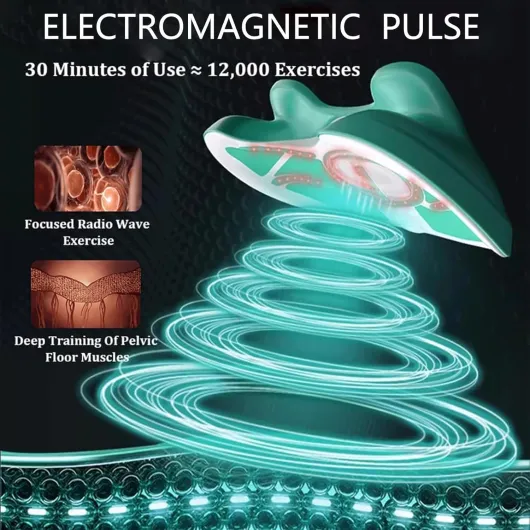
The 28‑minute program claims to trigger around 12,000 muscle contractions. Obviously, we can’t measure that, but the repeated pulses and contractions over the session do feel like a serious workout. By minute 10–15 on higher intensity, both of us felt some fatigue in the area, similar to holding Kegels repeatedly. The upside is that you can sit and let it run instead of having to focus the whole time. The downside is that it’s passive: if you rely only on this and never learn to actively contract those muscles, you’re missing part of the point.
Overall, I’d say effectiveness is "pretty solid" if you treat it as a helper, not the main solution. It’s good for people who struggle to locate or activate their pelvic floor muscles. It’s not a replacement for proper medical advice, physio, or a full rehab program. For us, it’s worth using a few times a week, but I wouldn’t buy it expecting to fix serious incontinence or heavy prolapse on its own. As a home tool to add to the toolbox, it gets the job done, just not beyond that.
Pros
- Delivers clear, strong pelvic floor muscle contractions during 28-minute sessions
- Can be used by both postpartum women and men for general pelvic and glute activation
- Lower cost than branded clinical-style pelvic floor chairs with similar basic function
Cons
- Hard plastic seat and generic build make it uncomfortable and cheap-feeling over longer sessions
- Minimal documentation, no clear medical backing, and unknown brand reduce trust
- Battery life and interface are basic, with vague indicators and no usage guidance or tailored programs
Conclusion
Editor's rating
After a few weeks of testing this generic electric pelvic floor muscle trainer, my summary is pretty straightforward: it works, but it’s rough around the edges. The device delivers real muscle contractions, the 28‑minute sessions feel like a focused workout, and both a postpartum user and a sedentary guy noticed some improvements. For light incontinence, general pelvic awareness, and a bit of hip/glute activation, it’s helpful. It’s not a miracle cure, but as a support tool, it’s decent.
Where it falls short is on comfort, finish, and guidance. The hard plastic seat isn’t very forgiving, the remote and overall build feel cheap, and the instructions are minimal. There’s no brand reputation to lean on, no real medical framing, and you have to figure out positioning and routine largely on your own. If you’re sensitive, anxious about health devices, or expecting something polished and app-connected, this will probably frustrate you.
I’d say this is for people who: already know a bit about pelvic floor issues, are okay with generic hardware, and just want a simple, at-home way to get regular muscle activation. It’s also better suited for mild to moderate concerns, not serious medical conditions. If you prefer guidance, better ergonomics, and a brand you can actually contact, you should skip this and either see a pelvic physio or invest in a more established device. For the price, though, it’s a functional, no-frills option that gets the job done if you’re realistic about its limits.