Summary
Editor's rating
Is it worth the money for what you actually get?
Bulky plastic seat that looks more medical than fitness
Battery life is fine, charging experience is basic
Not painful, but not really cozy either
Cheap ABS plastic that feels just okay
Pulses, intensity, and that 28‑minute session promise
What you actually get out of the box
Does it actually help the pelvic floor?
Pros
- Clearly stimulates pelvic floor and nearby muscles with noticeable contractions
- Wireless use with decent battery life (around 4–5 sessions per charge)
- Simple sit‑down operation that doesn’t require much effort or setup
Cons
- Unknown brand with weak documentation and no clear medical backing for big health claims
- Hard, unpadded plastic seat that’s not very comfortable for longer use
- Non‑standard charger and cheap overall build that doesn’t inspire long‑term confidence

Specifications
View full product page →| Brand | Generic |
A weird mix of gym machine and medical gadget
I’ve been testing this Generic Postpartum Recovery Pulse Pelvic Floor Magnetic thing for a bit, and I’ll be honest: I bought it more out of curiosity than confidence. The product page promises a lot: postpartum recovery, pelvic floor training, help with male prostate issues, better sexual function, all in 28‑minute sessions with magnetic pulses. For an unknown brand, that’s a lot of big claims. I went in with low expectations and treated it more like a cheap home fitness gadget than a medical solution.
In practice, it’s basically a plastic seat with built‑in electrodes / coils that send low‑frequency pulses to your pelvic area. You sit on it, pick an intensity, and let it buzz and contract your muscles. I’ve used EMS and TENS units before for muscles, so I kind of knew what to expect: a mix of tingling and involuntary contractions. If you’ve never tried that, the feeling is a bit odd at first, especially in that area.
What surprised me is how aggressively the seller talks about postpartum repair and prostate problems without any real medical backing shown. No clinical data, no known brand, no doctor endorsements, nothing. Just a bunch of claims and a single plastic device in the box. So I approached it as: can this help with basic pelvic floor activation and maybe glute engagement, not as a cure for anything serious.
Overall first impression: it’s a cheap, basic pelvic floor trainer that sort of does what it says in terms of making the muscles contract, but the medical‑sounding promises are, in my opinion, oversold. If you expect a clinic‑grade EMSELLA‑style chair for a fraction of the price, you’re going to be disappointed. If you see it as a home gadget to remind you to work that area and you’re okay with some compromises, then it’s at least interesting.
Is it worth the money for what you actually get?
Value is where this product sits in a grey area. On one side, clinic‑grade pelvic floor chairs and professional EM devices cost a lot more, so this Generic option is clearly in a different price universe. On the other side, for a no‑name brand with basic materials, a rough manual, and a lot of unproven health claims, the price still feels a bit high compared to simpler solutions like manual Kegel trainers or basic EMS units you can strap on.
What you’re paying for here is mainly the convenience of a sit‑down, hands‑free pelvic floor workout. If that’s something you know you’ll use regularly because you hate doing exercises manually, then the value is better. For someone postpartum or with urinary leaks who struggles to remember or feel Kegels, a gadget that kind of automates the contractions could be helpful as a reminder tool. But you have to be realistic: it’s not medically certified (at least not clearly stated), and there’s no real customer support ecosystem or brand reputation behind it.
Compared to other cheap pelvic trainers on Amazon, this one sits in the middle: more expensive than simple silicone Kegel weights or app‑less EMS pads, cheaper than branded pelvic floor chairs or smart app‑connected trainers. Personally, I think the value is acceptable if you catch it on discount and treat it as a supporting tool, not a main solution. If it’s listed at a very high price, I’d skip it and either save for a known brand or work with a pelvic floor physio and cheaper manual tools.
So in my opinion: value is average. It’s not a total waste of money if you actually use it consistently and you’re okay with the no‑frills approach, but it’s also not a miracle bargain. There’s clearly some cost‑cutting in materials and documentation, and the medical‑sounding promises aren’t backed up in a way that would justify a premium tag.
Bulky plastic seat that looks more medical than fitness
Design‑wise, the unit is basically a chunky plastic saddle/seat. The stated size is around 390×350×130 mm, and that matches what I received: it’s roughly the footprint of a small seat cushion, but thicker. You put it on a chair or stool and sit on it so your pelvic area is centered over the active zone. There are no moving parts, just a shaped surface with some subtle contours for your butt and thighs. It’s not pretty, but it’s functional enough.
Visually, it looks more like a low‑budget medical device than a fitness product. The plastic shell is plain, with basic vents and a small panel for the charging port and indicators. The color on mine was a neutral tone, nothing flashy. I wouldn’t leave it in the living room as decor, but it tucks away under a bed or in a closet easily. There’s no built‑in handle, so carrying it around the house is slightly awkward, but it’s light enough that it’s not a big deal.
In terms of ergonomics, it’s okay but not great. The seating area is a bit hard and flat. You can sit for the 28‑minute session, but if you’re bony or sensitive, you’ll probably want to put a thin cushion under it or use a padded chair. The product relies on your position being fairly centered to target the pelvic floor, so you end up shuffling around a bit the first few times to find the spot where the pulses feel even. Once you find the right spot, you kind of memorize the chair + body position for next time.
I also noticed there’s no obvious waterproofing or removable cover, which feels like a miss for something you sit on regularly in that area. Sweat, body oils, maybe postpartum leaks for some users… I would have liked some removable, washable layer. As it is, the design is basic and a bit clinical, and it does the job, but clearly optimized for cost, not user comfort or hygiene convenience.
Battery life is fine, charging experience is basic
The spec sheet says 2000 mAh battery, and that seems about right for how it behaves. With full charge, I got roughly 4–5 full 28‑minute sessions before it started showing low power signs and needed a recharge. That’s acceptable for something you’ll probably use once a day or every other day. You’re not tied to a cable for every session, which is nice if you want to use it in different rooms or don’t have an outlet right next to your chair.
Charging is done via the included adapter at 12.6V. This is not a standard USB‑C situation, which is a bit annoying. Lose the charger and you’re hunting for a specific replacement. A full charge takes around 2–3 hours from empty in my experience. There are small indicator lights to show charging status, but they’re not super intuitive. The manual explains them, but again, the translation is rough, so you have to double‑check what blinking versus steady really means.
During use, I didn’t notice any performance drop when the battery got lower. The pulses felt just as strong on the second or third day as on the first. It either works or it doesn’t; there’s no gradual weakening. Once it’s too low, it simply won’t start a new session. So you just get into the habit of plugging it in every few days. For a home device that isn’t used constantly, that’s fine, but I do wish it had a clearer battery percentage or at least a more obvious low‑battery warning before it refuses to run.
Overall, battery life is decent and matches the claimed capacity, but the non‑standard charger and vague indicators are small drawbacks. If you’re okay keeping track of when you last charged it, you’ll be fine. If you like precise info and USB‑C convenience, this will feel a bit outdated.
Not painful, but not really cozy either
Let’s be honest: sitting on a hard plastic device that sends pulses into your pelvic area is never going to feel "natural". Comfort is mixed. On the one hand, the actual pulses are tolerable once you dial in the right intensity. On the other, the seating position and surface could be better. For a 28‑minute session, I was generally okay, but I did shift around a few times, especially in the first uses while I figured out where to sit exactly.
The sensation itself ranges from light tingling to fairly strong contractions. At lower intensities, it’s just a gentle buzzing that you can almost ignore while scrolling on your phone. At higher levels, your pelvic floor and sometimes your glutes and lower abs contract noticeably, and you can’t really forget you’re using it. It’s not painful unless you crank it up too fast, but it can be uncomfortable if you’re not used to EMS‑style devices. I’d describe it as similar to those ab‑belt trainers, but focused lower.
For someone postpartum or with pelvic sensitivity, I would absolutely start at the very lowest setting and see how your body reacts. The device doesn’t do a great job of gradually ramping up; the jumps between some levels feel a bit abrupt. Also, there’s no real guidance on posture beyond "sit on it", so you need to experiment: sitting fully upright versus a bit leaned forward changes where you feel the contractions. Once I found a posture that worked, the sessions were manageable, but still not what I’d call relaxing.
So in terms of comfort: usable but basic. It’s fine for short daily sessions if you’re motivated by the potential benefits, but you’re not going to sit on this for fun. If you already have lower back or hip issues, the rigid shape might annoy you. I’d pair it with a supportive chair and maybe a small cushion under the thighs to make the experience less stiff.
Cheap ABS plastic that feels just okay
The product description says the main body is ABS, and that checks out. It’s that standard hard plastic you see on a lot of low‑cost devices. The shell feels reasonably solid; it doesn’t flex or creak too much when you sit on it, at least at my weight (around average adult). I never felt like it was going to crack under me, but it doesn’t give off a premium vibe either. Think mid‑range office plastic, not medical‑grade gear.
The surface is smooth and slightly glossy. That makes it easy to wipe, but also a bit slippery if you’re wearing certain fabrics. I sometimes had to adjust mid‑session because I’d gradually slide forward, which is annoying since position matters for where the pulses hit. A matte or slightly textured surface would probably have worked better. There’s no soft padding where you sit, so all the comfort has to come from your chair underneath and your clothing.
From a durability point of view, after repeated use I didn’t see cracks or major wear, but I’d be careful not to drop it from height or put heavy stuff on top. The internal electronics and coils obviously aren’t visible, so you just have to trust they’re not going to loosen. The seams where the plastic parts meet are a bit rough and not perfectly aligned in some spots. Nothing that hurts, but again, it screams low‑cost manufacturing.
For cleaning, I’ve just been wiping it down with a damp cloth and mild soap. Since there’s no removable fabric cover, that’s your only option. For something that deals with pelvic floor and possibly postpartum users, I’d have liked more attention to materials that are easier to sanitize and maybe some anti‑slip treatment. Overall, materials are pretty standard and feel more like a budget gadget than a professional rehab tool. They get the job done but don’t inspire long‑term confidence.
Pulses, intensity, and that 28‑minute session promise
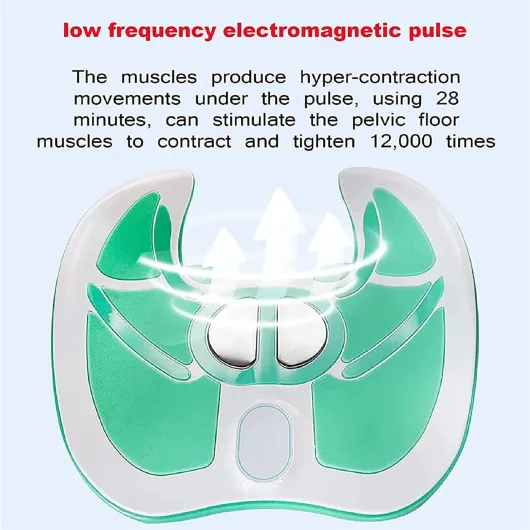
The brand keeps repeating "12,000 contractions in 28 minutes". Obviously I didn’t sit there counting, but the session length is accurate: one full program runs around that 28‑minute mark. During that time, the pulses cycle through different patterns: some short, rapid contractions, some longer holds, and some rest periods. It feels like a pre‑programmed workout rather than just a constant buzz, which is good because it keeps the muscles from getting too used to one pattern.
In terms of intensity, there are multiple levels (the manual lists them, but it’s not very clear). In practice, I found about the middle of the range to be the sweet spot: strong enough to cause visible contractions, not so strong that it feels like a shock. The higher levels are there, but for me they were borderline uncomfortable, especially on sensitive days. The remote makes it easy to bump things up or down during the session, but there’s no clear numeric display, so you’re kind of going by feel and the little LEDs.
The pulses are focused mostly on the pelvic floor, but depending on your position and body type, you might also feel your lower abs and glutes kick in a bit. That’s not a bad thing, but if your goal is purely pelvic floor, it takes some trial and error to sit exactly where the effect is strongest down there. Once you’ve dialed that in, the performance is consistent: every session felt roughly the same in strength and pattern, so at least it’s stable that way.
From a pure performance standpoint, I’d summarize it like this: decent muscle stimulation for a home device, but with rough edges. The intensity steps aren’t super smooth, the patterns are not adjustable beyond choosing a program, and there’s no app or advanced tracking. If you’re okay with a simple, "press button and sit" experience, it does what it says. If you’re used to pro‑level EMS gear, this will feel very basic.
What you actually get out of the box
Out of the box, the presentation is very bare‑bones. In my case it came in a generic carton with minimal branding and no real effort put into the unboxing experience. You basically get: the main seat unit, a power cable/charger, a basic remote, and a short user manual in broken English. That’s it. No carrying bag, no padding, no extra accessories. For the price, I didn’t expect luxury, but it still feels like a straight‑from‑factory product with zero polish.
The manual is probably the most annoying part of the presentation. It’s technically usable, but the translations are rough and a lot of the health claims are repeated without explaining how or why. For example, it says it helps male prostate problems, but never explains what kind of issues, how often to use it, or any warnings for people with medical conditions. Same for postpartum: there’s no mention of how long after birth you should wait, or to check with a doctor first. So in practice I ignored the health marketing and just used the manual to figure out the buttons and modes.
The remote is small and light, with basic buttons for intensity and mode. It works, but it looks and feels cheap. No screen, just indicator lights. You don’t really know what program you’re on beyond the little icons and LEDs. Compared to better known EMS brands that show clear levels and timers, this feels a bit like a toy. It does control the device fine though, so functionally it’s okay. Just don’t expect a premium feel.
So in terms of presentation: very utilitarian, almost no brand identity, and a manual that doesn’t inspire much confidence. It’s the kind of product where you double‑check each step the first time because you’re not sure the instructions are complete. If you’re used to Amazon no‑name gadgets, this will feel familiar. If you expect something that looks like it came from a physiotherapy clinic, this isn’t it.

Does it actually help the pelvic floor?
This is the big question. After regular use, here’s what I noticed. Using it every other day for a couple of weeks, the muscle activation is real. During the sessions, you can clearly feel your pelvic floor and surrounding muscles contracting. The day after the first few uses, I felt a mild "worked out" sensation in that area, similar to doing targeted Kegels or some core exercises. So as a passive trainer that reminds your body those muscles exist, it does something.
On the claims side, the product page talks about improving sexual sensitivity, helping male prostate problems, postpartum repair, urinary incontinence, and shaping the butt. That’s where I think expectations need to be realistic. I didn’t notice any dramatic change in sexual function or some kind of instant butt lift. The glute activation is there a bit, but if you want a rounder butt, you’re still better off with squats and hip thrusts. As for serious medical issues like incontinence or prostate problems, I wouldn’t rely on this as a main treatment. At best, it might complement proper exercises and medical guidance.
What I did find useful is that it made me more aware of my pelvic floor. After a week or so, I started doing voluntary contractions along with the pulses, kind of like assisted Kegels. That combo felt more productive than just sitting passively. Over time, I felt I had a bit more control in that area, but it’s hard to separate the effect of the machine from the fact that I was simply paying more attention and exercising those muscles intentionally.
So overall, I’d say it’s moderately effective as a basic pelvic floor stimulator, but the marketing oversells it. If you expect a bit of extra help with muscle activation and you’re willing to do your part (manual exercises, lifestyle changes), it can support that goal. If you expect it alone to fix postpartum issues or major urinary problems, you’ll likely be disappointed and should talk to a physio or doctor instead.
Pros
- Clearly stimulates pelvic floor and nearby muscles with noticeable contractions
- Wireless use with decent battery life (around 4–5 sessions per charge)
- Simple sit‑down operation that doesn’t require much effort or setup
Cons
- Unknown brand with weak documentation and no clear medical backing for big health claims
- Hard, unpadded plastic seat that’s not very comfortable for longer use
- Non‑standard charger and cheap overall build that doesn’t inspire long‑term confidence
Conclusion
Editor's rating
After using this Generic Postpartum Recovery Pulse Pelvic Floor Magnetic device for a while, my conclusion is pretty simple: it’s a basic home pelvic floor stimulator that works on a mechanical level, but everything around it (branding, documentation, big promises) feels shaky. It does make your pelvic floor and nearby muscles contract, the 28‑minute sessions run as advertised, and the battery life is decent. If you’re just looking for something to nudge you into training that area and you don’t mind a cheap, no‑name gadget, it can play that role.
Where it falls short is in comfort, polish, and credibility for the heavy claims it makes. The seat is hard, the manual is poorly written, and there’s no real medical or clinical backing presented for issues like postpartum repair, prostate problems, or incontinence. I’d see it more as a supplement to proper exercises and professional advice, not a replacement. For people who already have a pelvic floor routine and want an extra tool, or for those who know they’ll never stick to manual Kegels, it might be worth a try at the right price. If you have serious pelvic or prostate issues, or you want something with strong support and clear safety info, I’d skip this and talk to a specialist or look at better known brands.