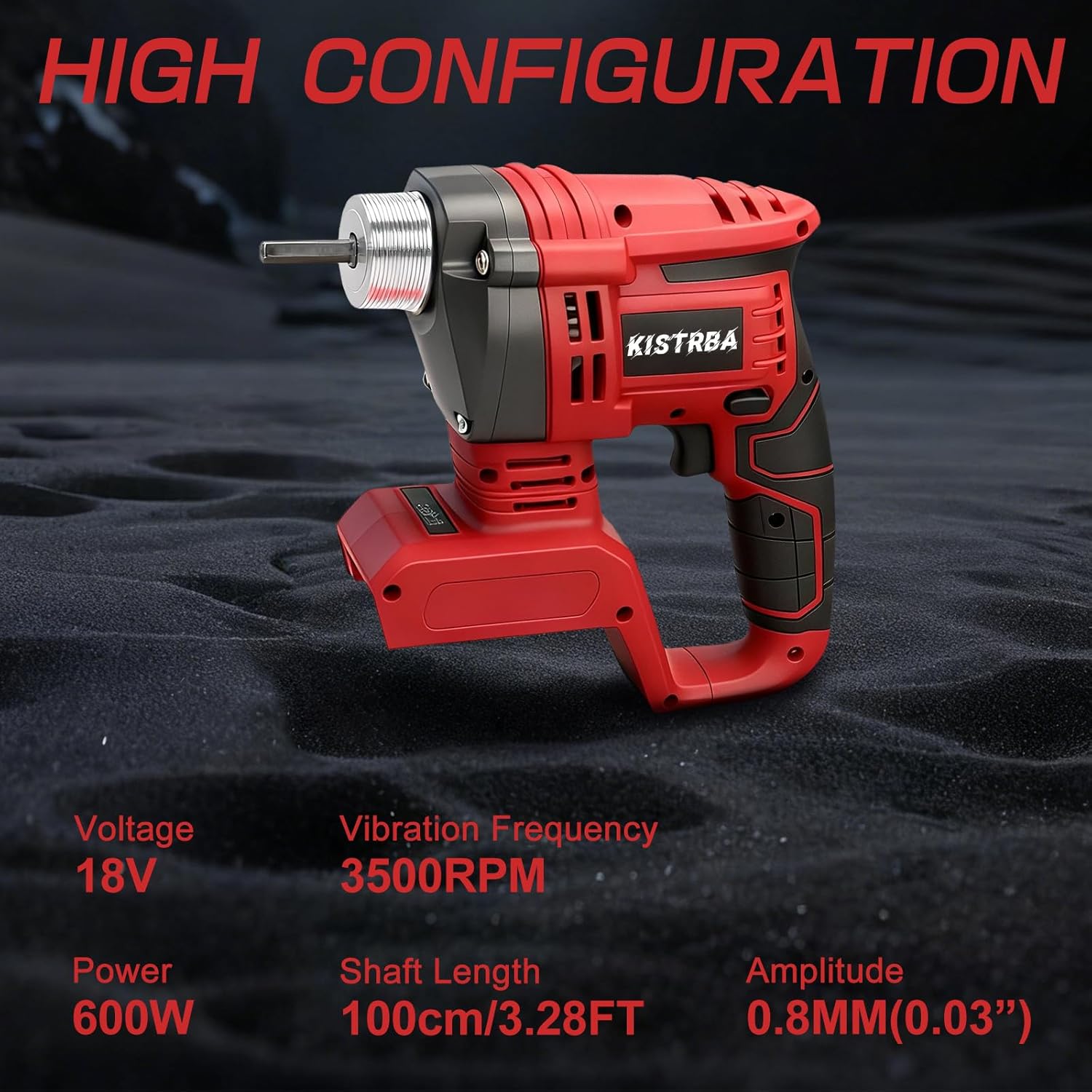
Summary
Editor's rating
Value for money: makes sense if you already own Milwaukee batteries
Design: not pretty, but thought out for basic site use
Battery behaviour: fine with 4.0–5.0 Ah, painful with small packs
Durability: feels solid enough for DIY, unknown for daily pro use
Performance: decent power for small jobs, but not a site workhorse
What you actually get out of the box
Pros
- Compatible with existing Milwaukee 18V batteries, so no need for a separate battery ecosystem
- Enough power to properly compact small slabs, footings and fence posts if you use 4.0–5.0 Ah packs
- Brushless motor runs relatively smooth and doesn’t overheat quickly for light to moderate use
Cons
- 1 m hose and 35 mm head limit it for deeper or larger pours compared to pro units
- Needs 4.0 Ah or higher batteries to avoid overload and short runtime, small packs feel weak
- Unknown brand with basic finish and uncertain long-term durability for heavy professional use

Specifications
View full product page →| Brand | Kistrba |
A cordless concrete vibrator that piggybacks on your Milwaukee batteries
I picked up this cordless concrete vibrator mainly because I already have a pile of Milwaukee 18V batteries lying around. I needed something for small slabs, fence posts and the odd footing, and I didn’t feel like dragging a cord and a big petrol unit every single time. The listing is a bit vague and the brand isn’t exactly famous, so I went in expecting something basic, not a pro-grade site tool.
I’ve used it now on a small garage slab, a few garden footings and some post holes. In short: it works, but you have to be realistic. It’s more of a handyman / light site backup tool than something you’d give to a crew to run all day. The 1 m hose and 35 mm head are fine for small pours, but you quickly feel the limits on thicker slabs or deeper forms.
The main thing I noticed is that the brushless motor gives decent power for a cordless tool, but you really feel the battery sag if you try to push it too hard or use a low-capacity pack. With a 4.0 Ah Milwaukee battery it behaves OK; with old tired 2.0 Ah packs, it cuts out or feels weak. The seller’s note about 4.0 Ah or more is not marketing – it’s basically mandatory.
Overall first impression: nothing fancy, a bit rough around the edges, but for small DIY concreting where you just want to chase out air pockets and avoid honeycombing, it does the job. If you expect the same punch as a corded 1500 W unit or a petrol backpack, you’ll be disappointed. If you want a cordless helper for occasional work and already own Milwaukee batteries, it starts to make sense.
Value for money: makes sense if you already own Milwaukee batteries
On value, the key point is that this is a tool-only unit from an unknown brand, aimed at people who already have Milwaukee 18V batteries. If you had to buy batteries and charger just for this, it would quickly stop making sense. But if you’re already in the Milwaukee ecosystem and you’re just adding a concrete vibrator to your arsenal, the price is relatively reasonable compared to renting or buying a full pro-brand kit.
When I compare it to hiring a vibrator from a rental shop, here’s how it breaks down in my head. Renting a decent corded or petrol vibrator for a day isn’t that cheap, and if you have several small pours spread over weeks, the rental costs add up fast. With this cordless one, you pay once, and even if it’s not the strongest, it’s always on hand for quick jobs like a few fence posts or a small footing. For that type of use, the value is actually pretty good.
Against a real Milwaukee or other big brand cordless vibrator, it’s obviously cheaper, but you’re trading off warranty, finish, and probably long-term durability. If you’re a professional pouring concrete regularly, I’d say skip this and save up for a brand-name unit that can take daily abuse. But for a homeowner or small contractor who does occasional concrete work and wants to avoid cords, this is a decent but not spectacular compromise.
So in terms of value: if you already own 4.0–5.0 Ah Milwaukee batteries and your use is occasional, it’s pretty solid. If you’re expecting pro-level performance and lifespan at a budget price, you’ll be let down. There’s better out there, but at this price point and with Milwaukee compatibility, it earns its keep as a practical, no-frills option.
Design: not pretty, but thought out for basic site use
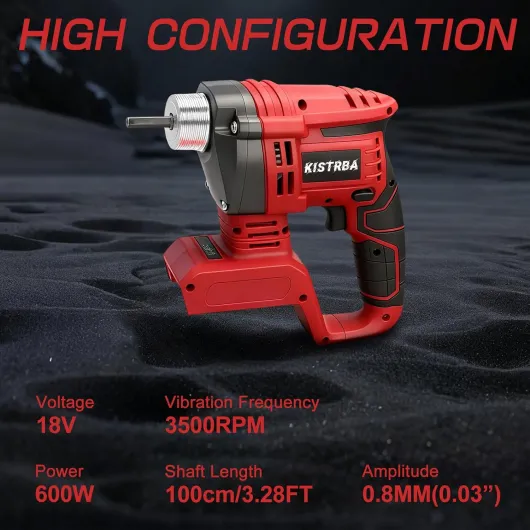
Design-wise, this thing looks like a generic red-and-black tool built to roughly mimic Milwaukee’s shape so the battery fits. It’s not ugly, but it definitely doesn’t have the same finish or detailing as a real Milwaukee body. The plastic housing is ABS, and it feels fairly tough – I accidentally knocked it against the edge of a form and dropped it once from about knee height onto gravel, and it only got a few scratches, no cracks.
The handle shape is okay. You’ve got a main pistol grip where the battery sits and a front area you can grab with your other hand to stabilize the hose. There’s no soft rubber overmold in the usual spots, just hard plastic with a bit of texture. After 20–30 minutes of continuous use, the vibrations definitely travel into your hands and forearms. You’ll want gloves. It’s not unbearable, but compared to better-branded tools, you feel that the ergonomics are just “good enough”, not really optimised.
The switch is covered with a dustproof rubber cap, which I actually appreciate. On site everything gets dusty and splashed, and so far the trigger hasn’t stuck or filled with grit. There’s no lock-on button though, so you have to keep your finger on the trigger the whole time, which can get a bit tiring on longer pours. I would have liked a simple lock-on for straight runs along a slab.
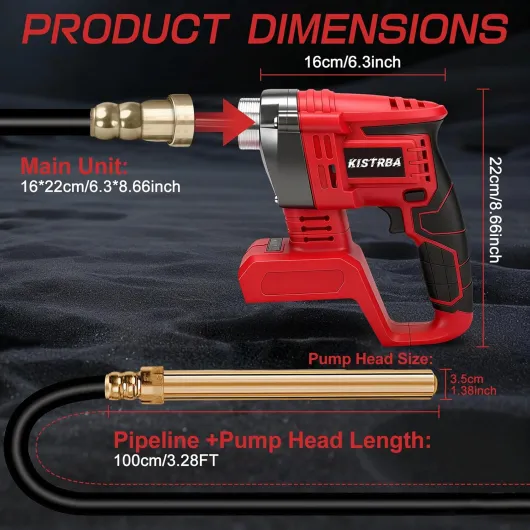
The 1 m hose screws into the body firmly and hasn’t loosened on me yet. The bend radius is acceptable: it’s flexible enough to snake around rebar and into corners, but stiff enough that the head doesn’t just flop around uselessly. Biggest design compromise in my opinion is the hose length – 1 m is okay for shallow work, but if you’re doing deeper footings or columns, you’ll wish for 1.5–2 m. So the design is functional and fairly robust, but clearly built to a cost, with comfort and finer details sacrificed a bit.
Battery behaviour: fine with 4.0–5.0 Ah, painful with small packs
Since the tool doesn’t come with a battery, how it behaves really depends on what Milwaukee packs you plug in. I tested it with three: an older 2.0 Ah, a 4.0 Ah, and a newer 5.0 Ah. With the 2.0 Ah, it was honestly a bit useless for anything more than a few post holes. The motor would start strong, then sag quickly, and on heavier use it actually cut out a couple of times, clearly hitting some overload protection. So the seller’s tip about using 4.0 Ah or higher is not optional – it’s basically a requirement.
With the 4.0 Ah battery, I got roughly 20–25 minutes of effective vibrating on and off during the garage slab pour. That was enough to do the 10 m² area in passes, but I had to be mindful not to waste time. With the 5.0 Ah, I comfortably finished several fence posts and a small footing in one go without swapping packs. So in practice, I’d say plan on one mid-size battery per small project, or have two on hand if you’re doing something larger.
The good point is that the tool doesn’t seem to drain the battery insanely fast when you’re just moving between spots or repositioning. It’s the continuous running that eats through the charge, as expected. Also, the connection to the Milwaukee battery is tight and there’s no intermittent cut-out from vibration, which I was half expecting from a third-party body – so that’s a relief.
Downside: there’s no battery indicator on the tool itself, you’re relying on whatever is on the Milwaukee pack. And because the motor is brushless and protected, it sometimes just stops when the battery is low or overloaded, without much warning. That can be annoying if you’re mid-way through a beam. Overall, battery behaviour is acceptable if you already own good 4.0–5.0 Ah packs, but if you only have small or tired batteries, this isn’t going to be fun to use.
Durability: feels solid enough for DIY, unknown for daily pro use
I’ve only had this vibrator for a few weeks, so I can’t pretend to know how it will hold up over several years, but I can share what I’ve seen so far. The build doesn’t scream “premium”, but it also doesn’t feel like a toy. The ABS casing has taken a couple of knocks, some concrete splashes and a light drop without any cracks. I rinsed off the shaft and head with a hose after each use (trying not to soak the motor end), and nothing has rusted or seized yet.
The shaft itself feels reasonably well made. The rubber outer layer hasn’t split and the head hasn’t loosened. When running, there’s no odd rattling or metal-on-metal noise that would suggest something is coming apart inside. The duplex bearing and secondary quenched gears mentioned in the listing basically mean the insides are a bit more reinforced than the cheapest no-name tools. At least, that’s how it feels in use: vibrations are controlled and there’s no sudden change in tone that would hint at internal wear after just a few jobs.
One thing I’m a bit cautious about is the dust sealing. The switch has a dustproof cap, which is good, but the rest of the housing has the usual small gaps and seams of a budget tool. On a dusty site, I wouldn’t be surprised if fine cement dust slowly finds its way in over months. For occasional DIY work, I think it’s fine, but if I were using this every day on a big project, I’d probably blow it out with compressed air regularly and be ready for a shorter lifespan than a real Milwaukee or other pro-brand vibrator.
So from what I’ve seen: durability seems okay for light to moderate use, especially if you rinse the shaft quickly after each use and don’t throw the tool around. But it’s still a budget, unknown-brand body. I wouldn’t rely on it as the only vibrator for a professional crew. As a backup or for a homeowner doing occasional pours, I’m reasonably confident it’ll last a while if you treat it with a bit of care.
Performance: decent power for small jobs, but not a site workhorse
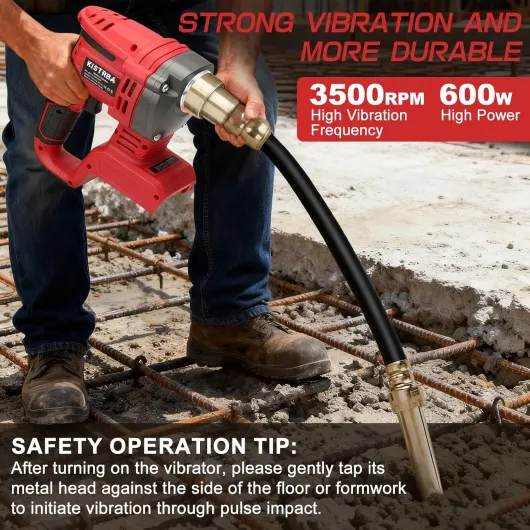
On performance, I tested this vibrator on three types of jobs: about a 10 m² garage slab at 10 cm thickness, a series of fence post holes around 80 cm deep, and some small strip footings for a garden wall. In all cases, it managed to chase out visible air pockets and you could see the surface of the concrete settle and shine up, which is what you want. So in basic terms, it works as a concrete vibrator should.
Compared to a corded 1500 W unit I’ve rented before, the vibration intensity is a step down. You notice it especially in stiffer mixes or when you try to work too fast. With this cordless one, you have to move the head more slowly and spend a bit longer in each spot to get the same compaction. For a DIY pace, it’s acceptable, but if you’re used to a more powerful pro vibrator, it will feel a bit underpowered. The 3500 RPM figure is probably accurate, but torque and amplitude are not on the same level as big corded tools.
On the plus side, the brushless motor seems efficient. I didn’t notice major overheating, even after 20–25 minutes almost non-stop on the slab. The body got warm but not worrying, and there was no burning smell. The duplex bearings and copper motor, all the fancy terms in the listing, basically translate to: it runs reasonably smooth and doesn’t scream or rattle like some cheap brushed tools. Noise is still high (it’s a vibrator after all), but not unbearable with basic ear protection.
If I had to sum it up: for small to medium DIY pours, it gets the job done, as long as you’re patient and use a decent battery. For big slabs, deep foundations, or all-day professional use, it’s too limited – both in raw power and in convenience (short hose, no lock-on, cordless runtime). I’d rate performance as solid mid-range: not terrible, not impressive, just functional.
What you actually get out of the box
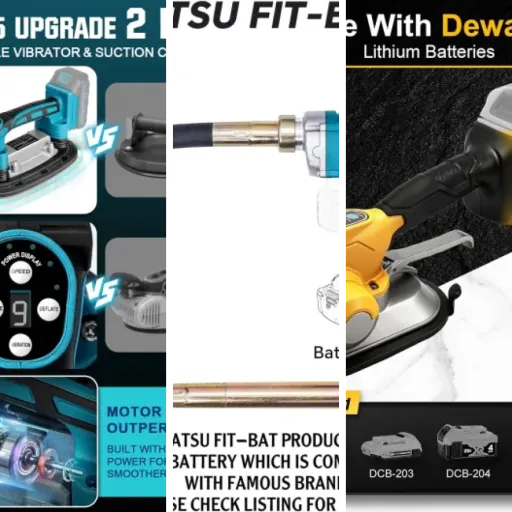
When the box arrived, the first thing I noticed is how barebones the package is. You get the handheld body, the 1 m flexible shaft with the 35 mm head already attached, and that’s basically it. No battery, no charger, no carry case, no strap, and the manual is thin and a bit roughly translated. For an experienced DIYer it’s fine, but a complete beginner might be left guessing about best practices and safety.
The tool is clearly designed to clip straight onto Milwaukee 18V lithium-ion batteries. I tried it with an M18 5.0 Ah and a 4.0 Ah battery – both clicked in firmly and felt stable. There’s no play or wobble at the battery interface, which is important when you’re shaking the tool around in wet concrete. The trigger is a simple on/off type with a dust cover, no speed control or fancy modes, so what you see is what you get.
On paper, they claim 3500 RPM and a brushless motor, and in hand it does feel like it spins up quickly and stays fairly consistent as long as the battery is decent. The vibrator head is 35 mm, which is kind of the standard small-site size, good for fence posts, beams, and thinner slabs. The 1 m hose length is usable but a bit short if you’re working on deeper forms or tall columns – you end up leaning over the form or moving around more than with a longer shaft.
So in terms of presentation: simple tool-only package, no frills. If you’re already in the Milwaukee ecosystem and you know what a concrete vibrator is for, you’ll be fine. If you were expecting a full kit with case, instructions, and accessories, this will feel a bit cheap and stripped back. It’s clearly targeted at people who just want a functional head and motor and already have the rest.
Pros
- Compatible with existing Milwaukee 18V batteries, so no need for a separate battery ecosystem
- Enough power to properly compact small slabs, footings and fence posts if you use 4.0–5.0 Ah packs
- Brushless motor runs relatively smooth and doesn’t overheat quickly for light to moderate use
Cons
- 1 m hose and 35 mm head limit it for deeper or larger pours compared to pro units
- Needs 4.0 Ah or higher batteries to avoid overload and short runtime, small packs feel weak
- Unknown brand with basic finish and uncertain long-term durability for heavy professional use
Conclusion
Editor's rating
After using this cordless concrete vibrator on a few real jobs, my conclusion is pretty simple: it’s a practical tool for small DIY and light trade work, as long as you already own decent Milwaukee 18V batteries and you know its limits. It compacts concrete properly on small slabs, footings and fence posts, the 35 mm head is a sensible size, and the brushless motor gives enough power for this kind of cordless setup. It’s not refined, and it’s not pretending to be a top-tier pro tool, but it does the basic job you buy it for.
On the downside, the 1 m hose is a bit short, the ergonomics are just okay, and with small or tired batteries it becomes frustrating quickly. Durability feels fine for occasional use, but I wouldn’t bet on it as the only vibrator for a crew pouring concrete every day. The lack of extras (no case, minimal manual, tool-only) also shows that this is built to a budget. If you want something polished with strong support and a long warranty, a branded unit will suit you better, but you’ll pay a lot more.
So who is this for? It’s for the homeowner or small contractor who already has Milwaukee batteries and wants a cordless vibrator to avoid cables and rentals on small pours. Who should skip it? Full-time concrete workers, anyone without existing Milwaukee 18V packs, and people expecting high-end comfort or power. For my use – occasional but real jobs – it’s not perfect, but it earns its spot in the van.