Summary
Editor's rating
Value for money: decent if you manage your expectations
Design: more clinic box than modern health gadget
Battery and charging: acceptable but nothing special
Comfort of use: not exactly relaxing, but manageable
Materials and build: solid enough, but clearly budget
Performance and modes: simple, usable, but not very smart
What you actually get in the box (and what’s missing)
Effectiveness: some improvement, but not a miracle cure
Pros
- Simple interface with three clear modes and adjustable intensity
- Provides noticeable passive contractions that can support pelvic floor training
- Rechargeable with acceptable battery life for several sessions per charge
Cons
- Very basic manual and no structured rehab programs or feedback
- Generic build quality and unknown brand, with a slightly cheap feel
- Long list of contraindications that make it unsuitable for many people

Specifications
View full product page →| Brand | CHANGLKJ |
A slightly awkward device to talk about, but here we go
I’ve been testing this CHANGLKJ Pelvic Floor Muscles Contract Instrument for a bit because I wanted something for pelvic floor work at home, without having to book physio appointments all the time. It’s not exactly the kind of gadget you brag about at dinner, but it addresses real issues: postpartum recovery, light incontinence, prostate-related weakness, that kind of stuff. I went in with pretty realistic expectations: if it could help me feel more control and less heaviness/urgency, that would already be a win.
Right away, I’ll say this: it feels more like a small clinic-style machine than a modern consumer product. The packaging and the overall look scream “medical device from Amazon” rather than polished health tech. But that’s not automatically a bad thing; what matters is whether it’s safe, usable, and if you notice any difference after using it regularly. I treated it like a rehab tool, not a wellness toy.
The brand is clearly not a big name. That shows in the manual (which is a bit rough) and in the way the warnings are written. There are a lot of restrictions: no use during pregnancy, menstruation, lactation, no metal implants, no internal contraceptive device, etc. You really need to read that page carefully before even plugging it in. I actually spent my first evening just going through the instructions to make sure I wasn’t missing anything important.
Overall, my first impression was: “Okay, this looks a bit basic and old-school, but if it contracts the muscles and doesn’t fry anything, I can live with that.” I wasn’t expecting miracles, just some support for pelvic floor training. In the rest of the review, I’ll go through how it’s built, how it feels to use, whether the modes are useful, and if I actually noticed any change after sticking with it.
Value for money: decent if you manage your expectations
Value is where this device sits in a bit of a grey zone. It’s clearly from a lesser-known brand, with fairly basic design and a rough manual. At the same time, it offers features that you’d usually only get in clinic gear: targeted pelvic floor stimulation, multiple modes, warmth, and a rechargeable host. If you compare the price of this to several physiotherapy sessions, it can pay for itself pretty quickly if you actually use it regularly. That’s the key: it only has value if it doesn’t end up in a closet.
Compared to more established pelvic floor trainers (including the ones with apps and biofeedback), this one is cheaper but also much more basic. You don’t get progress tracking, no guided programs, no integration with your phone. You’re paying for raw stimulation and a simple interface, nothing more. If that’s all you want, the price feels fair. If you like structured rehab and visual feedback, you’re better off spending more on a smarter device or working with a physio who has pro equipment.
Another thing to factor in is the long list of restrictions: no use with metal implants, no internal contraceptive devices, no menstruation, no pregnancy or lactation, etc. That already cuts out a lot of people. If you buy it and then realize you can’t use it because of one of those conditions, it’s basically wasted money. So I’d strongly recommend checking your own situation with a doctor or physio before buying. This isn’t like buying a generic massager; it’s more medical than that.
For me personally, the value is “decent but not outstanding”. I noticed some benefit, the build is okay for home use, and the battery is acceptable. At the same time, the lack of detailed guidance and the generic feel make me hesitate to recommend it blindly. If you’re on a budget, know what you’re doing, and just want a simple tool to support your pelvic floor work, it can be a reasonable choice. If you’re unsure, easily anxious about health stuff, or need more hand‑holding, I’d probably save up for a more established solution or stick with supervised physio.
Design: more clinic box than modern health gadget
From a design point of view, this thing is pretty plain. The main unit is a rectangular ABS plastic box, roughly the size of a thick book. It’s not heavy considering the shipping weight listed, but it’s not super compact either. You can store it under a bed or in a drawer, but it’s not pocket‑sized. The front has an LCD screen that shows mode and intensity, and a few physical buttons. The layout is simple enough that after one or two uses, you don’t really need the manual anymore to navigate the basic settings.
The screen is not high-resolution or fancy, but it’s readable. Backlight is okay; I could see it fine in a dim bedroom. The buttons have a slightly cheap clicky feel but they respond reliably. There’s no touch interface or anything like that, and honestly I’m fine with that on a device that you might use in slightly awkward positions. Physical buttons are easier to operate by feel. The color and styling are very generic medical white/grey, nothing stylish. If you’re hoping for something that looks like a premium wellness gadget, this isn’t it.
One thing to note is that there’s no real effort put into making the device discreet. If someone walks into the room and sees it on a table, it absolutely looks like some sort of medical stim box. There’s no cover for the screen, no cable management, no pouch. I ended up wrapping the cable around the unit and keeping it in the shipping box just to keep things somewhat tidy. They could easily have included a simple storage bag or at least some basic organization, but no luck there.
In practice, though, the design is functional. You plug it in, pick a mode, adjust intensity, and that’s it. Nothing confusing, no nested menus. I never once got lost in the interface, which is more than I can say for some more modern devices. So visually it’s boring and a bit dated, but for a rehab tool, I’d rather have something boring that works than fancy design that gets in the way. Just don’t expect it to look like a premium branded product; it looks and feels like a generic medical gadget.

Battery and charging: acceptable but nothing special
The product sheet says the charging time is about 1.5 hours, and that more or less matches what I saw. From empty to full, it took around an hour and a half plugged into a normal outlet. There’s no fancy charging dock; it’s just a basic cable into the unit. No USB‑C either, at least on my version, which is a bit dated in 2024, but not a deal‑breaker if you mostly charge it at home. You can use it while plugged in, but I preferred to run it on battery so I didn’t have wires across the room.
Battery life is… fine. With 20‑minute sessions at medium intensity, I could get several days of use before needing a recharge. Roughly, I’d say 4–6 sessions per charge depending on how high you crank the intensity. There’s no super precise battery indicator, more a basic symbol that goes down over time. So you don’t know exactly how many minutes are left, but you can see when it’s getting low. Once it’s in the last bar, I just plug it in after the session to avoid it dying mid‑use.
Heat while charging wasn’t an issue. The unit got slightly warm, but nothing worrying. I did follow the warning about not using it at high temperatures and not putting it near heaters, mostly because the manual repeats that. The cable itself is light but didn’t show any problem during my tests. I wouldn’t pull on it too hard though; it doesn’t look like the most robust part of the kit.
Overall, the battery and charging setup are average. It’s good enough that you don’t have to recharge after every session, but it’s not the kind of device you throw in a bag and use all week without thinking. For a home‑only rehab tool, I’m okay with that. Just build the habit of charging it every few days and you’ll be fine. If you’re looking for something ultra‑portable with long battery tracking and fast charging, this is not it.
Comfort of use: not exactly relaxing, but manageable
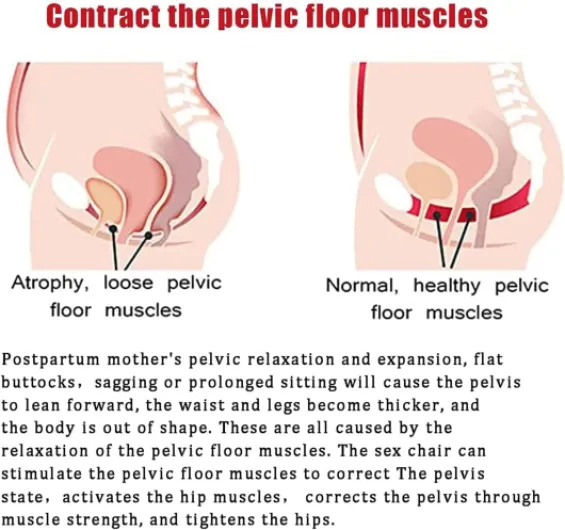
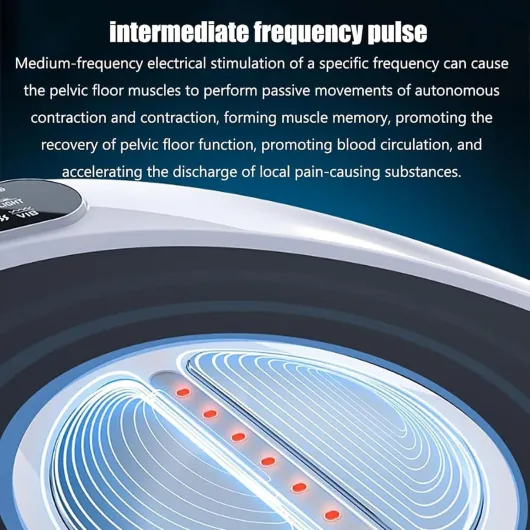
Comfort is where this type of device really matters, because if it’s unpleasant you just stop using it and it ends up in a drawer. The brand sells it as non‑invasive and focused on passive pelvic floor contractions, with high-frequency vibration (4000 times/s) and warmth. In practice, the sensations are a mix of gentle buzzing and deeper pulsing. At low intensity, it’s pretty tolerable, more like a strange tingling. As you increase the level, it becomes a stronger, more focused contraction feeling, which can be borderline uncomfortable if you push it too far.
For the first few sessions, I kept the intensity fairly low just to see how my body reacted. After about 10–15 minutes, I did feel the muscles working without me having to actively clench. There is some benefit to that if you struggle to find or hold the contraction yourself. The warmth feature is subtle: it doesn’t feel hot, more like a gentle increase in temperature around the area after a bit of use. I didn’t find it irritating, and it actually helped me relax once I got used to the pulsing.
What’s less comfortable is the overall setup. Because there’s no super clear guide on positioning and session structure, you end up experimenting. That can make the first couple of sessions a bit awkward and mentally tiring. Also, the constant awareness that this is a medical‑style stimulation, not a massage cushion, makes you a bit more tense at first. After three or four sessions, though, I got into a routine: pick a mode (I mostly used intermittent), set a low‑medium intensity, and sit or lie down with a podcast for 20 minutes. Once I had that habit, comfort was acceptable and I wasn’t dreading using it.
One important point: if you’re very sensitive, you absolutely need to start at the lowest setting and creep up slowly. The jump between certain intensity steps feels a bit abrupt. It’s not painful in my case, but it can surprise you. Overall, comfort is okay but not spa‑like. It’s a rehab feeling, not a pampering feeling. If you’re fine with that mindset, you can live with it. If you want something that feels nice and relaxing first and therapeutic second, this is probably not the right product.
Materials and build: solid enough, but clearly budget
The main material here is ABS plastic. That’s written right in the product description, and it feels exactly like that: standard, slightly glossy medical‑style plastic. The casing doesn’t flex or creak much when you press on it, which is a good sign. It doesn’t feel like it’s going to fall apart in your hands, but it also doesn’t give that dense, premium feel you get from more expensive equipment. I’d call it decent for home use, nothing more.
The buttons are also plastic, with a basic membrane-style mechanism underneath. After several sessions, they still click okay and didn’t sink or get mushy, so at least in the short term they seem fine. The LCD screen is covered by a thin plastic window, not glass. That means it can probably scratch if you toss it around with keys or hard items. I’d suggest keeping it in the original foam or at least in a soft bag if you want it to stay clean and readable.
The cable and connectors (on mine) felt a bit cheap. They work, but the insulation isn’t super thick and the connectors don’t have much strain relief. If you’re rough with cables, I can see these being the first thing to fail over time. For a device in this price range and from a no‑name brand, I wasn’t expecting industrial grade materials, but it’s worth mentioning. I handled it gently and had no issue during my test period, but I wouldn’t yank on the cords or bend them sharply.
On the hygiene side, at least the outer surfaces of the host are easy to wipe down with a disinfectant cloth. The plastic doesn’t seem porous, and it handled gentle cleaning fine. There’s no noticeable smell from the materials, which is good when you’re using it regularly in a small room. Overall, the materials are okay for the price: not impressive, but not alarming either. It feels like what it is: a budget home rehab unit made to a cost, not a hospital‑grade device you’d expect to last for a decade of daily use.
Performance and modes: simple, usable, but not very smart
On the performance side, the device is pretty straightforward. You get three modes: continuous, intermittent, and long intermittent. Continuous just keeps the stimulation going at a steady rhythm. Intermittent alternates between active and rest phases more quickly, and long intermittent stretches out the rest periods. In practice, I found intermittent the most useful, because it feels closest to what a real training session should be: work, rest, work, rest. Continuous can be a bit overwhelming if you’re sensitive, and long intermittent felt a bit too lazy for me, like I was spending half the session waiting.
The claim about 4000 times/s high-frequency vibration sounds impressive on paper, but from a user perspective, what you actually feel are different intensities and patterns of pulsing. It doesn’t feel like a massage gun; it’s more like electrical or mechanical stimulation that triggers contractions. The intensity range is wide enough that you can go from “barely there” to “okay, that’s a bit much”. I rarely went above the middle of the scale, and that was enough to feel the muscles working.
What’s missing is any kind of smart feedback or automatic program. There are no preset “postpartum plan” or “prostate support” sequences. You just pick a mode and time yourself. There’s also no timer countdown on mine, so I used my phone to track session length. For a modern device, that feels a bit primitive. It works, but you have to be disciplined and organized yourself. If you’re the kind of person who likes guided programs, you’ll probably find this too bare.
Stability-wise, I didn’t have any glitches. No random shutoffs, no weird error messages. Once charged, it turns on quickly, switches modes without lag, and keeps the same intensity level unless you change it. So the core performance is reliable but basic. It does what it says on the tin, but there’s zero extra intelligence built in. For the price and unknown brand, I’m okay with that, but if you’ve used more advanced medical rehab gear before, you’ll feel the difference immediately.
What you actually get in the box (and what’s missing)
When you open the box, you basically get one main thing: the host unit, which is the control box with the LCD screen and buttons. My package was very bare-bones: host, power cable, and that’s it. The listing says “Other Accessories” but doesn’t clearly spell out what those are, and in my case there was no fancy extra probe or cushion included, just the main device and lead. So if you’re expecting a whole kit with multiple pads or a seat cushion, temper your expectations. It’s closer to a simple stim machine than a full rehab system.
The host itself looks like a compact medical box: ABS plastic shell, a small LCD screen on the front, and physical buttons to choose modes and intensity. The device claims three working modes: continuous, intermittent, and long intermittent. There’s also mention of 4000 times/s high-frequency vibration and an intelligent warmth feature. In practice, that means you feel a mix of pulsing and buzzing in a repeating pattern, plus a gentle warmth after a while. Nothing fancy, but it does feel like the muscles are being stimulated instead of just “massaged”.
The paperwork is where the product feels a bit cheap. The manual I got was short, with basic English and not a lot of diagrams. It does mention all the contra-indications, but it doesn’t really walk you through a step‑by‑step rehab plan. So if you’re hoping for a structured program like “week 1 do this, week 2 do that”, it’s not there. You kind of have to decide yourself how long and how often to use it, or ask a physio for guidance. For something dealing with pelvic health, I would have liked clearer instructions and maybe more safety explanations.
In terms of first setup, it’s simple enough: you charge it (takes about 1.5 hours according to the sheet, that matched what I saw), then you pick a mode on the screen and start at a low intensity. There’s no app, no Bluetooth, no fancy tracking. If you like simple, you’ll appreciate that. If you like data and progress graphs, you’ll find it very basic. Overall, the presentation is functional but a bit rough, and it really feels like a generic clinic device rebranded for home use.
Effectiveness: some improvement, but not a miracle cure
Effectiveness is the big question here. In my case, I used the device regularly for a couple of weeks, roughly 20 minutes per session, 4–5 times a week. I focused mainly on intermittent mode, since that felt closest to the kind of on/off contractions you’d do in normal pelvic floor exercises. After about a week, I noticed a small but real difference: slightly better control when I needed to hold in urine, and a bit less feeling of heaviness at the end of the day. It’s not a dramatic change, but it was enough that I didn’t feel like I was wasting my time.
The main thing I liked is that it reminds your body what a contraction feels like without you having to think about it constantly. For people who struggle to “find” their pelvic floor, that’s helpful. I also noticed that after a session, doing manual Kegels felt easier and more precise. So for muscle memory and awareness, it does contribute. On the downside, the device doesn’t give you any biofeedback or numbers. You can’t see if you’re actually getting stronger over time, you just have to judge by how you feel day to day.
For serious incontinence or very advanced prolapse, I honestly doubt this alone would be enough. The product copy makes it sound like it can fight urinary incontinence effectively, and maybe for mild cases that’s fair, but I’d still combine it with proper physio guidance and classic exercises. Also, if your problems are prostate‑related, I’d definitely talk to a doctor before relying on a generic device like this. It’s a support tool, not a medical treatment that replaces proper follow‑up.
Overall, I’d rate the effectiveness as decent but not mind‑blowing. I saw some benefit with regular use, mainly in awareness and slight improvement in control, but it’s not a night‑and‑day difference. If you go in expecting a helper that nudges you in the right direction and complements other rehab work, it makes sense. If you expect it to fix everything on its own in a week, you’ll be disappointed. Consistency seems to matter more than the gadget itself: use it regularly, don’t crank it too high, and pair it with normal pelvic floor exercises.
Pros
- Simple interface with three clear modes and adjustable intensity
- Provides noticeable passive contractions that can support pelvic floor training
- Rechargeable with acceptable battery life for several sessions per charge
Cons
- Very basic manual and no structured rehab programs or feedback
- Generic build quality and unknown brand, with a slightly cheap feel
- Long list of contraindications that make it unsuitable for many people
Conclusion
Editor's rating
Overall, this CHANGLKJ Pelvic Floor Muscles Contract Instrument is a plain but usable home rehab gadget. It looks and feels like a small clinic device rather than a polished consumer product, and the brand is clearly not a big name. Still, the core functions are there: three modes, adjustable intensity, a bit of warmth, and a rechargeable host. With consistent use, I did notice some improvement in pelvic floor awareness and a slight reduction in urgency/heaviness, which is what I was hoping for. It’s not a miracle, but it’s not useless either.
Where it falls short is in guidance, refinement, and overall polish. The manual is basic, there’s no structured rehab program, no biofeedback, and the design is very generic. You need to be comfortable experimenting a bit and ideally have some external advice (physio or doctor) on how often and how long to use it. The long list of contraindications also means it’s not suitable for everyone, and that’s something you really shouldn’t ignore. In short: it can help as a support tool if you already know what you’re doing and you’re disciplined.
I’d say this device is best for people who: have mild pelvic floor issues, want a simple at‑home helper, are okay with a no‑frills interface, and are on a budget. People who should probably skip it: anyone with complex pelvic problems, a lot of anxiety about medical devices, or who needs clear, guided programs and strong brand support. In those cases, talking to a professional and going for a more established product or clinic treatment will likely be a better investment.